Leith Local Place Plan
A local place plan for the three Leith Community Councils, informed by significant consultation.

The Leith Local Place Plan is registered with the City Council. You can view it here. The plan came from public consultation through 2025 and a period of drafting and further consultation in early 2026.
The Scottish Government state that “Once completed and then registered by the planning authority, they [local place plans] are to be taken into account in the preparation of the relevant local development plan.” Leith’s Plan was submitted in time to be considered in the drafting of City Plan 2040.
The Leith Local Place Plan was approved and submitted by the three Leith Community Councils: Leith Harbour & Newhaven, Leith Links, and Leith Central. The Community Councils are now using it as a basis to respond to Planning Applications and other Council activity in the city.
From the exercise a group is looking at forming a Development Trust, and a community energy group has been started. The findings support the current Leith Town of Culture campaign as well as the proposals for a Leith Museum at the Customs House.
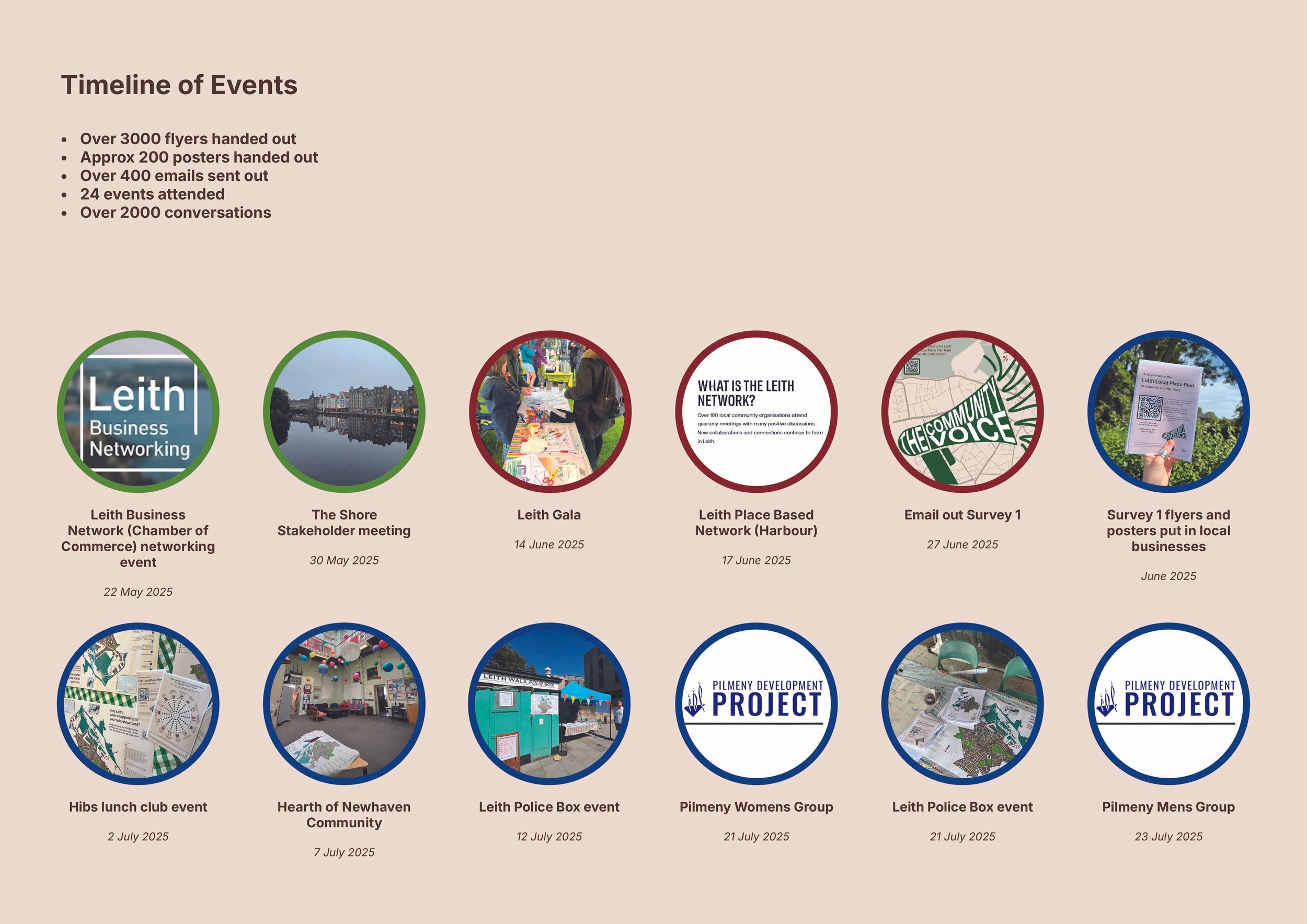
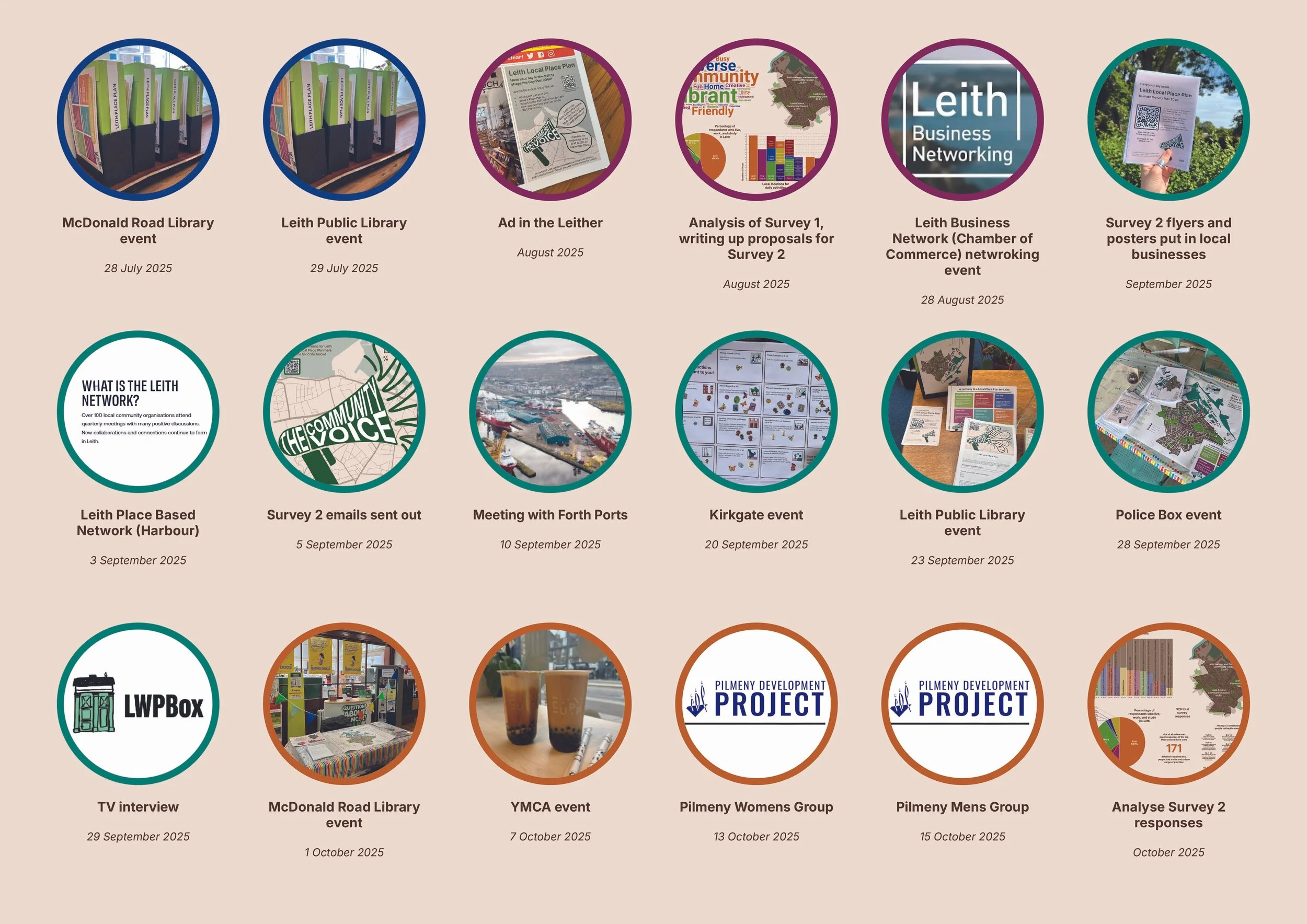
The Leith Local Place Plan was a the result of over seven hundred questionnaire responses, thirty events and over two thousand conversations.
The full document gives the detail. We have provided a summary below.
Local Place Plan Introduction & Summary
The Consultation carried out for the Place Plan (which can be viewed in full in Appendix A of the Plan and is summarised below) clearly demonstrated that residents feel that Leith is a great place to live. This is shown by the high demand to live here, rising property values, and repeatedly being on lists of ‘coolest place to live’ nationally and globally. In the Consultation eight areas out of fourteen were scored in the top half of the range by residents, and none scored in the bottom third.
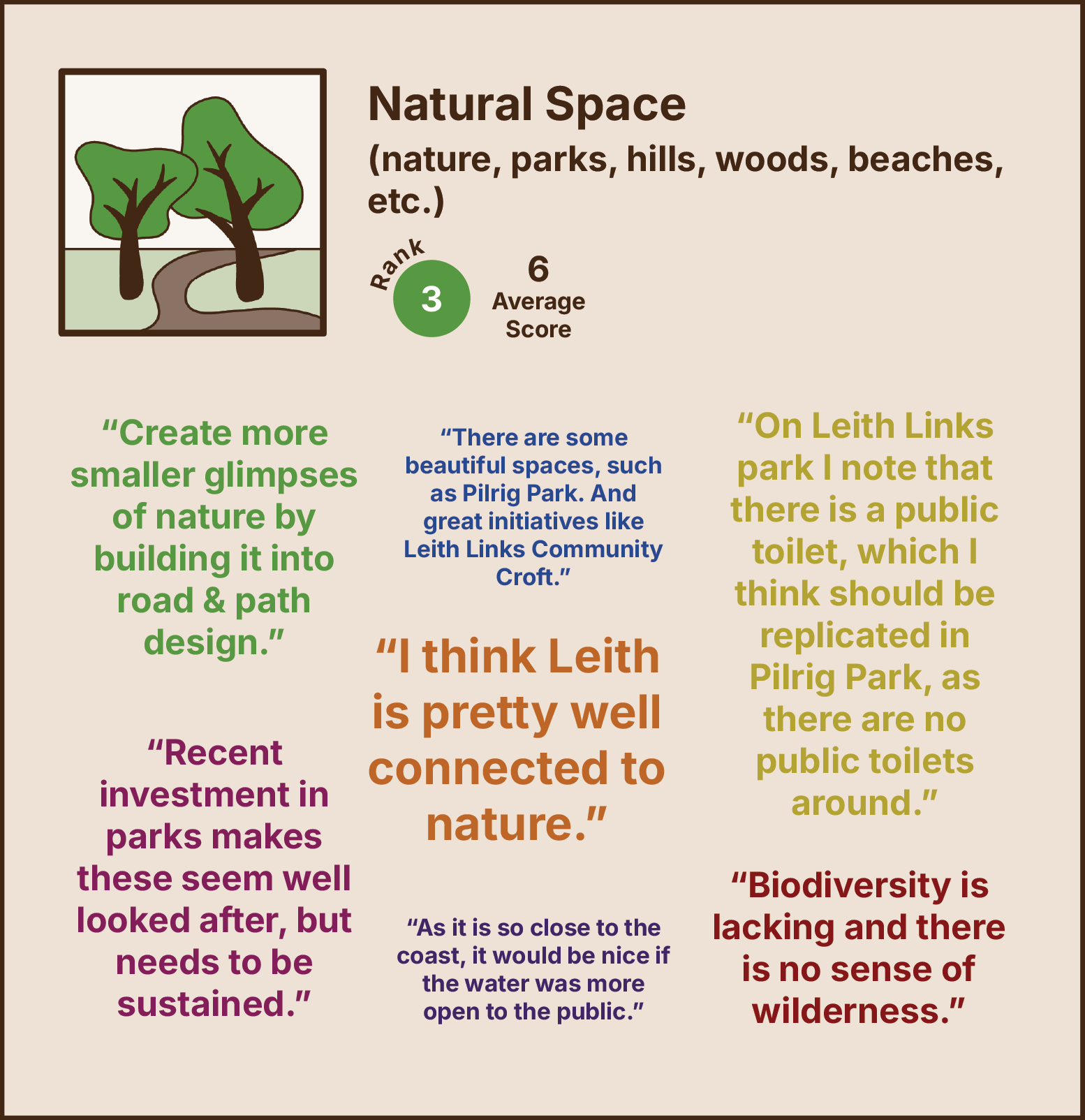
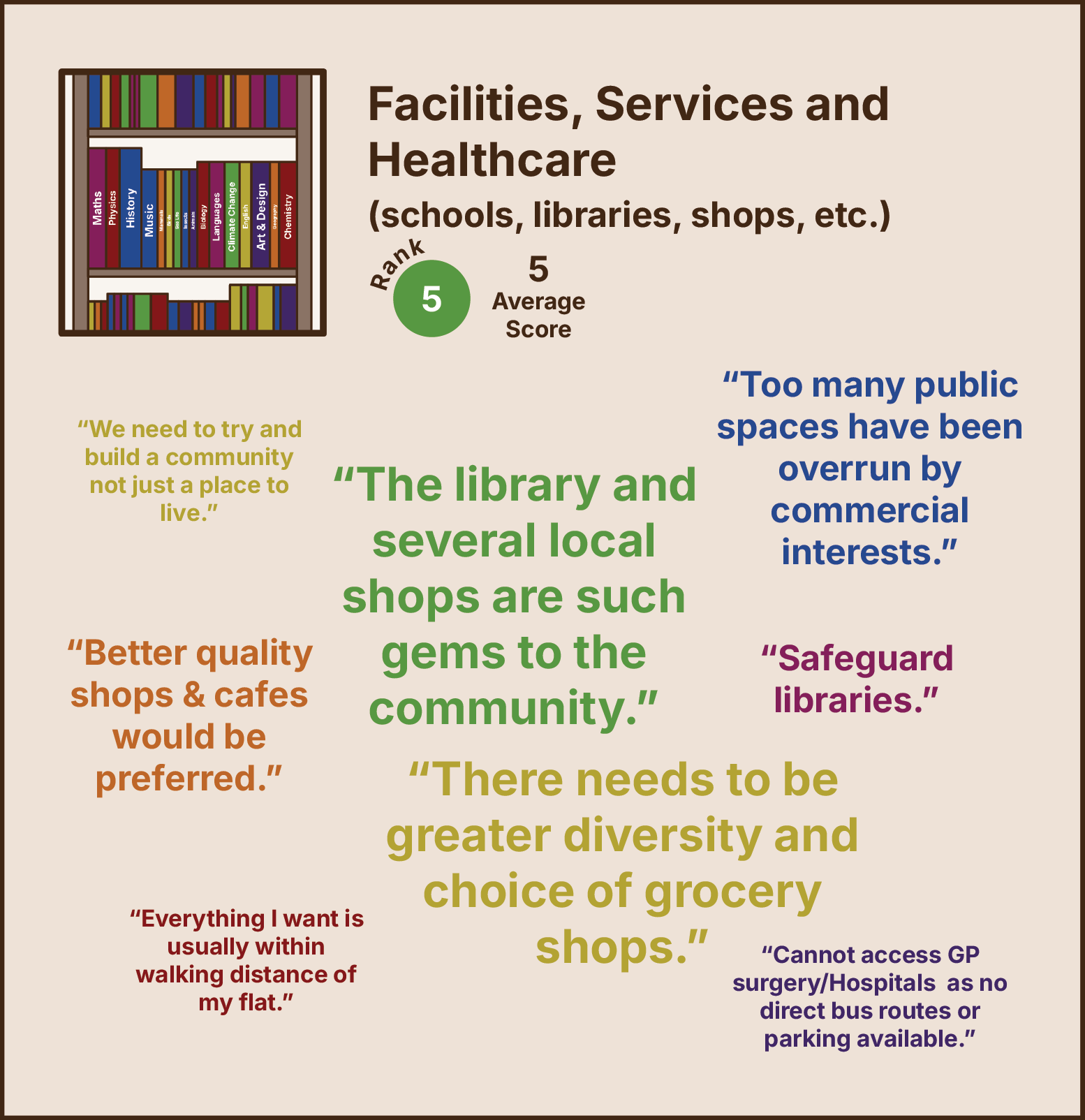
Leith residents would like the things that make it such a good place to live to be protected. This includes the libraries, the independent shops, the parks, and the public transport. And, if possible, they would like these things improved and expanded.
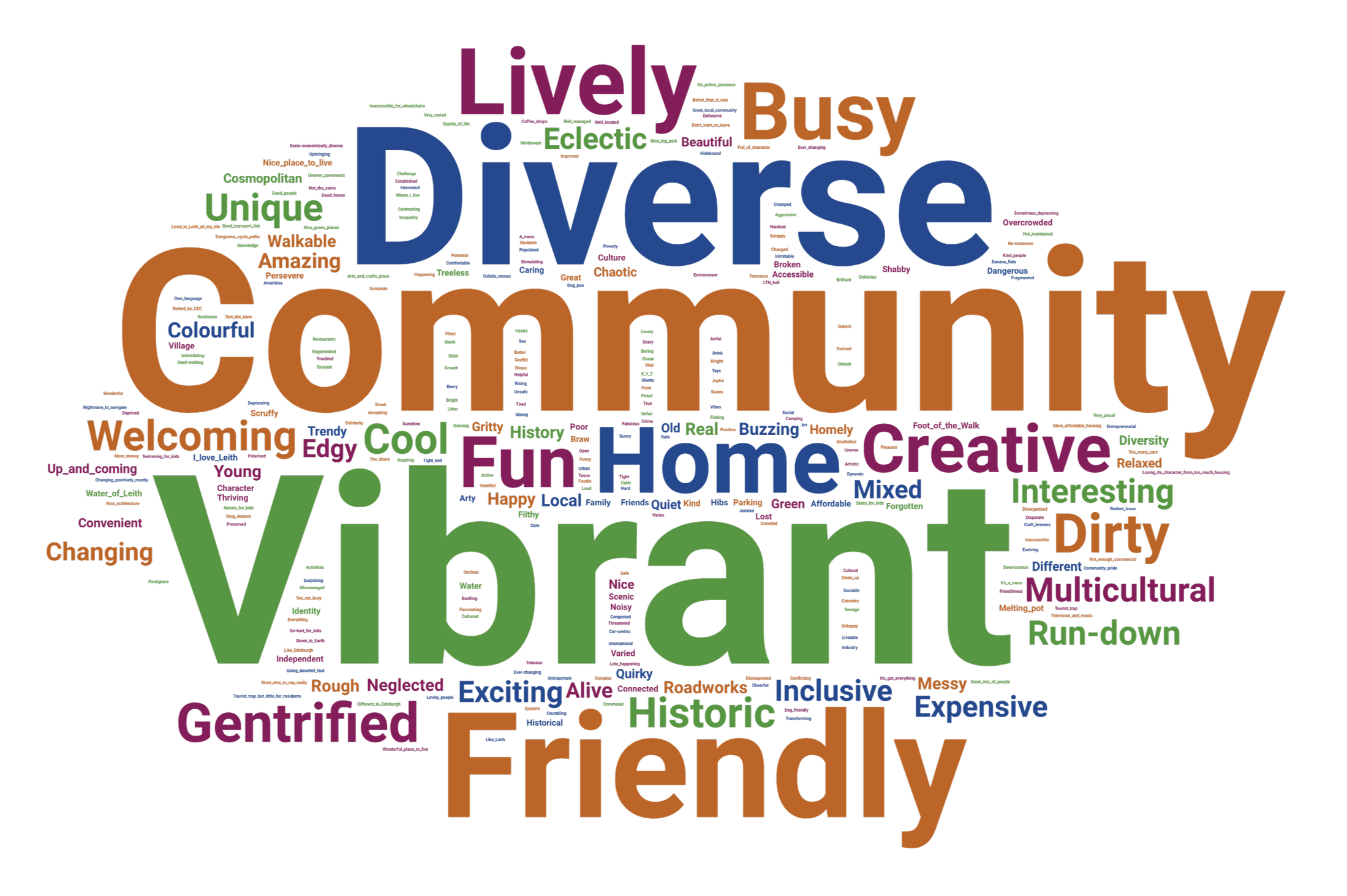
Wordcloud from Survey 1 responses
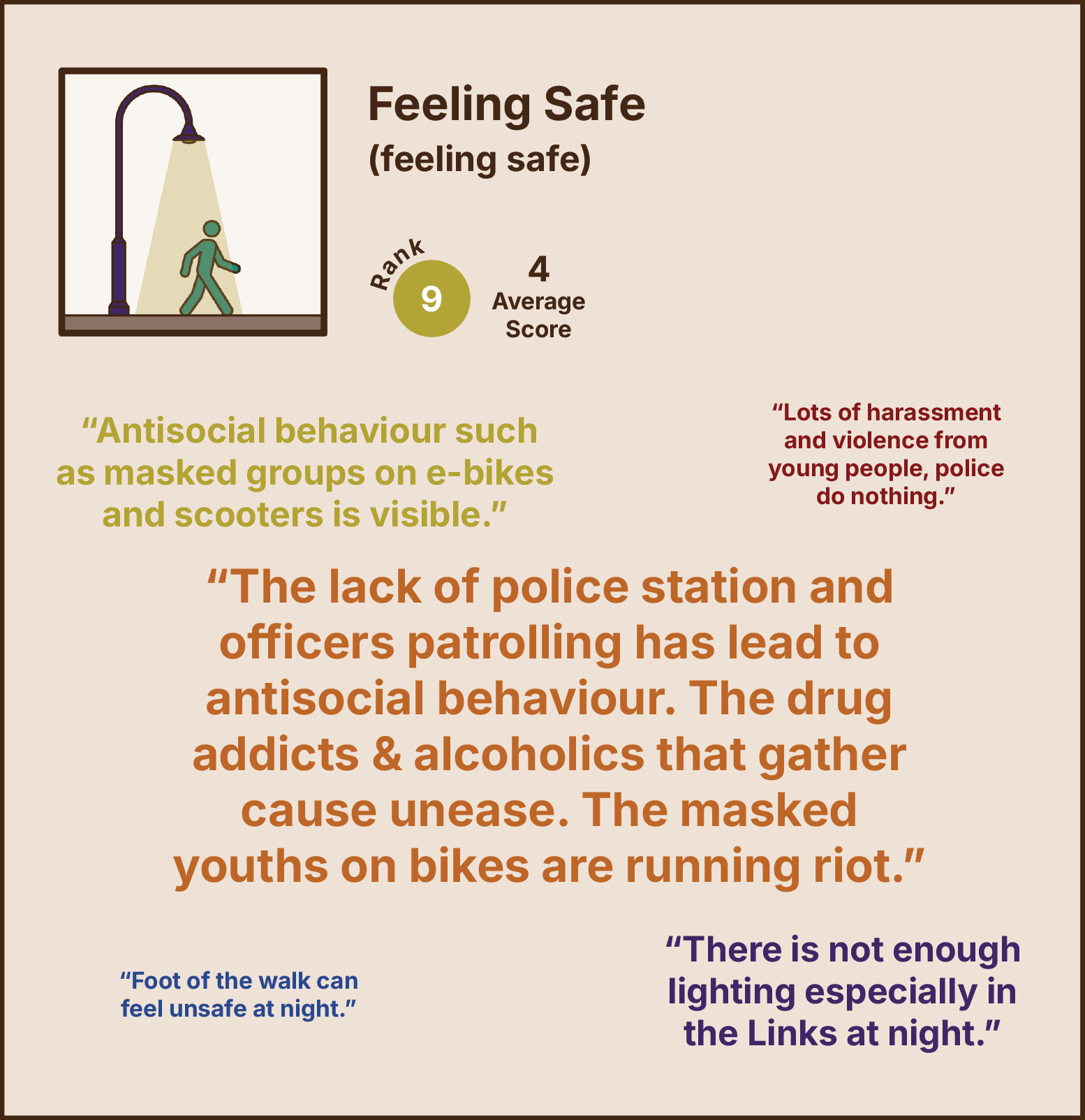
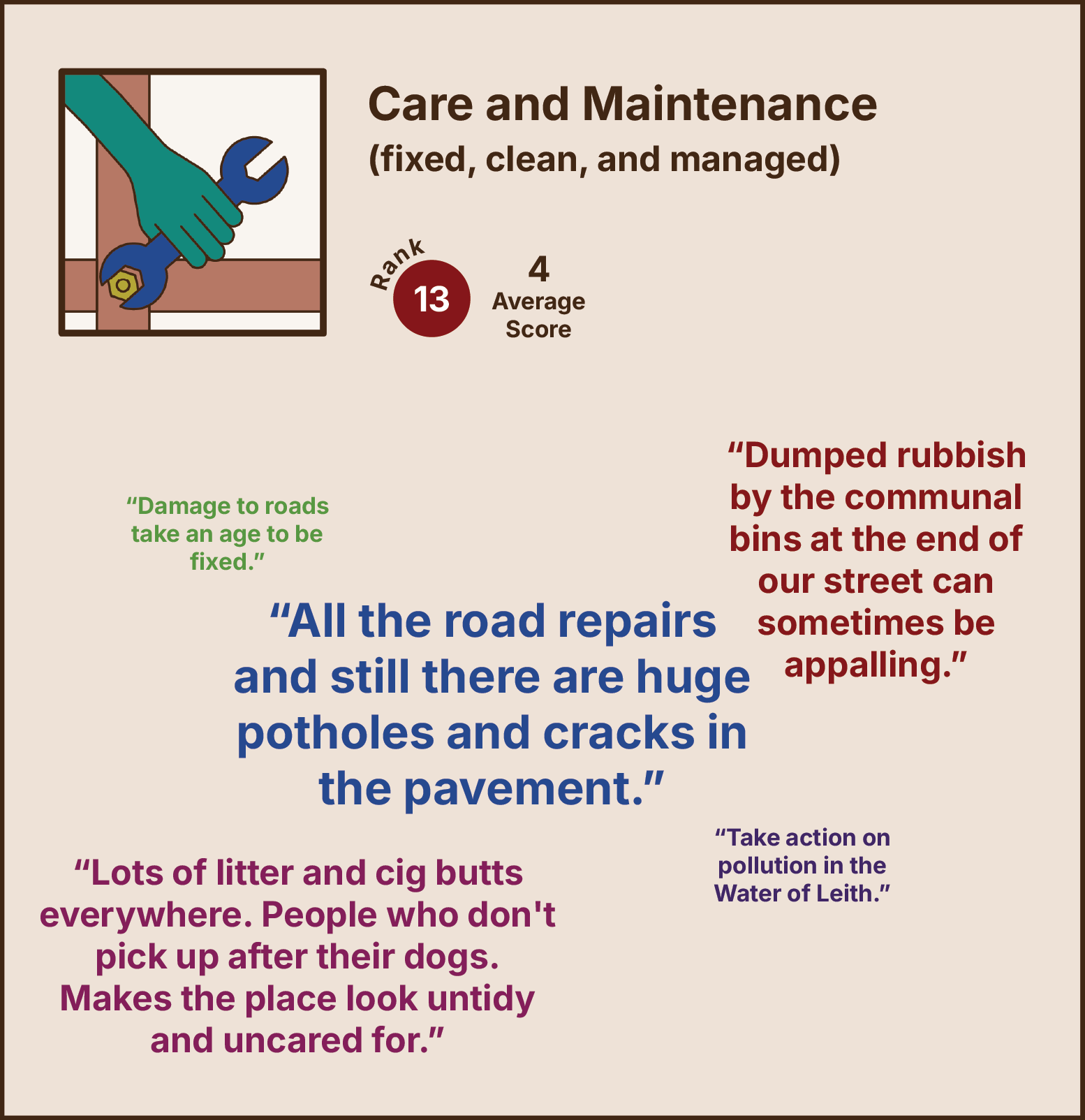
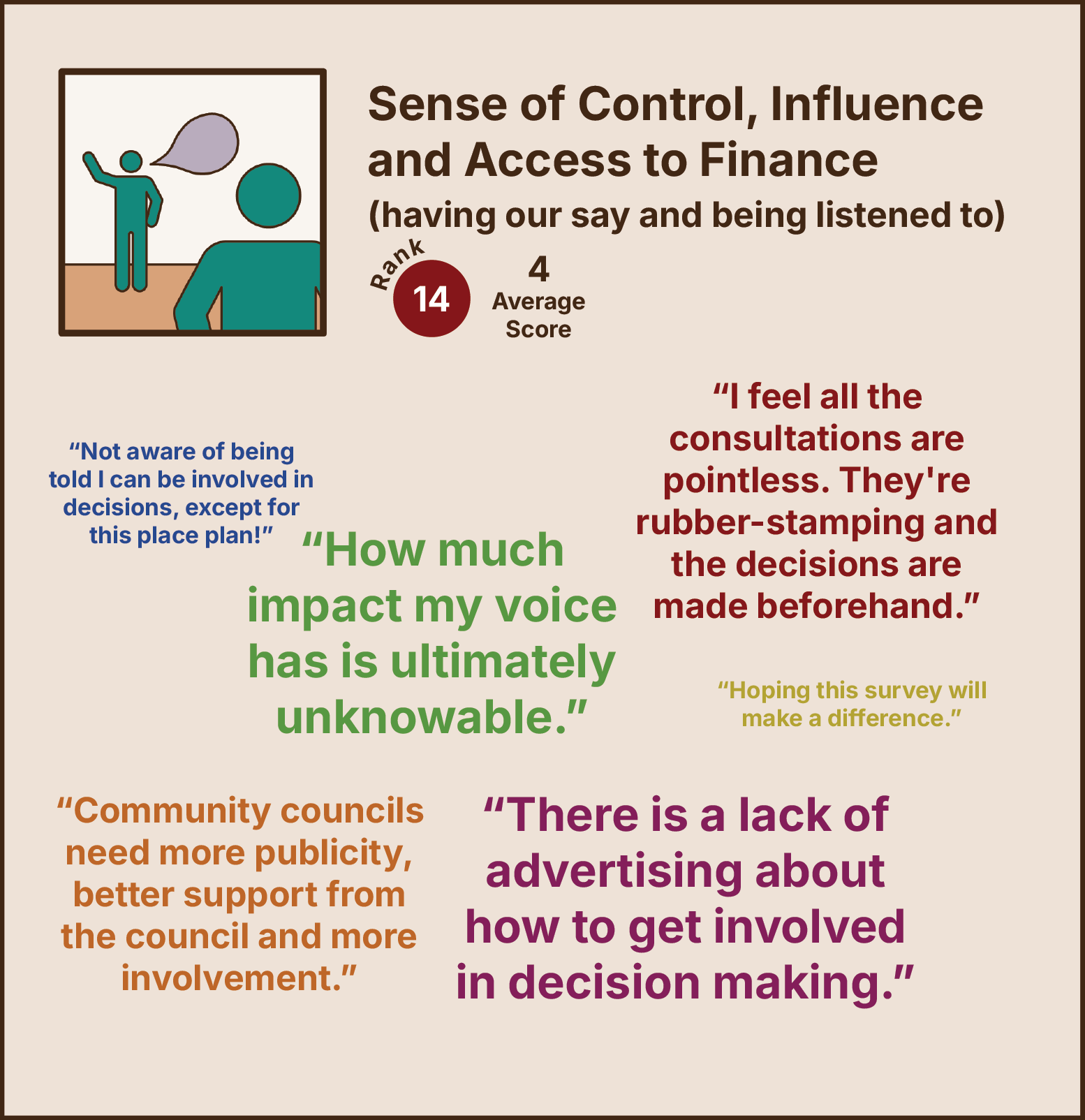
Scoring in survey 1 against the Place Standard Tool
At the same time, Leith is undergoing rapid social change which is reflected by changes to its built environment. As a port, Leith has always had new arrivals and the continuing change in the makeup of the population is felt as pressure on many residents. The Place Plan Consultation shows concern about many aspects of this change. The Plan identifies these in the following topics, around which the Plan is arranged: have amalgamated both in the summary sections below.
Leith is a varied and vibrant community with many different groups and communities. Leith is and must continue to be a social place that respects all those who make it their home, with spaces for all people to meet and enjoy themselves (Topic A).
Leith is struggling with a growing population, rising house prices and rents, and changes that reduce good quality housing for residents. Leith must become a place with homes for the whole community - a comfortable, affordable home for every resident (Topic B).
The varied communities travel around Leith, as well as those who travel into it, or travel through it, put pressure on each other when moving about. Though steps have been made to improve travel in Leith, the consultation showed things still not working. Leith must be fair for all to move around – it must become a place that is fair for all moving around it, into it, or through it (Topic C).
Leith is a place where often life is lived outside, despite the weather. These outdoor areas don’t work for everyone, so Leith must be a place with streets that are alive - outdoor spaces that are fair for all to use, safe, pleasant, green and fun (Topic D).
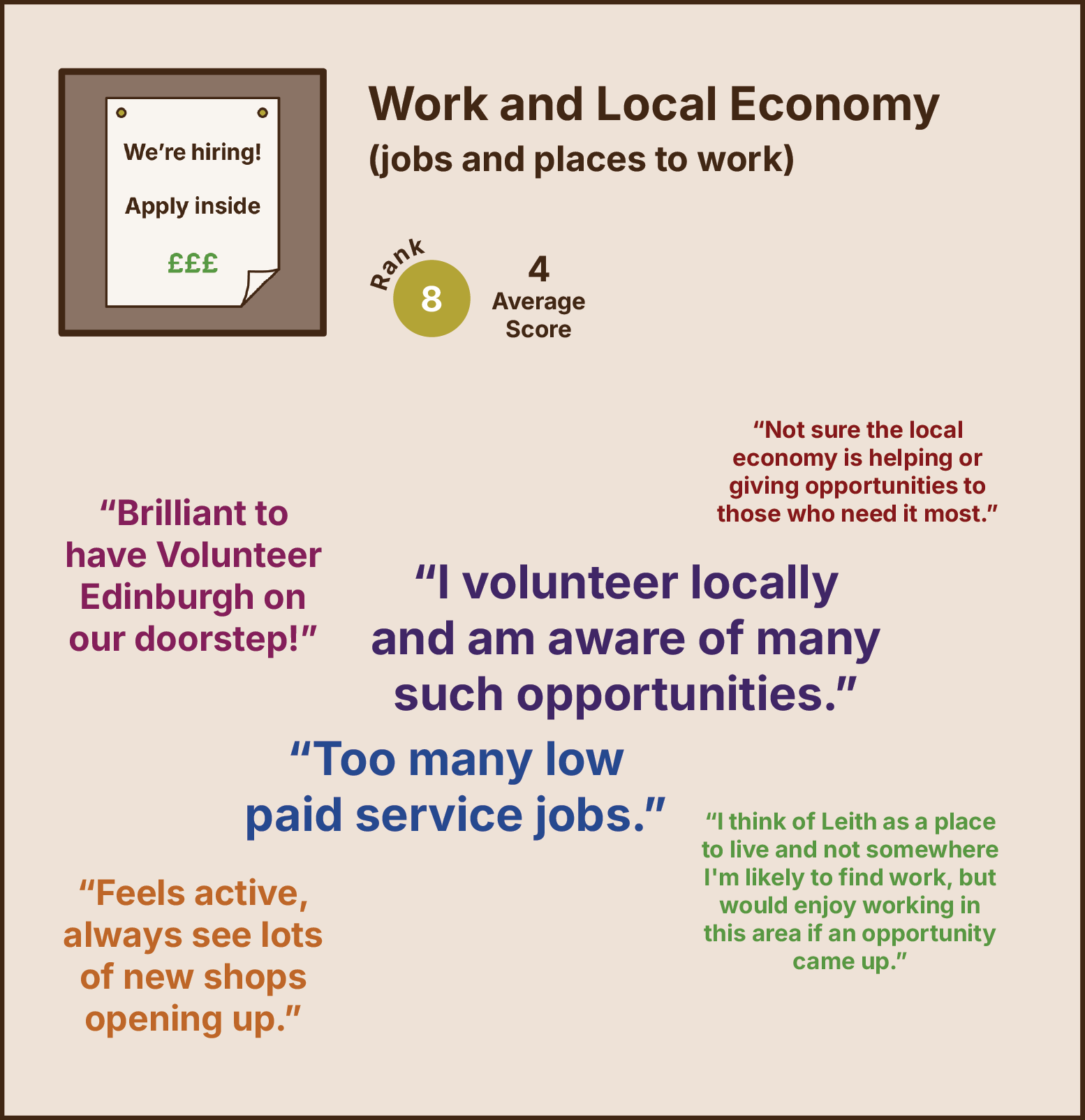
Leith has undergone significant changes to its economic character: first a port, then a place for industry, including shipbuilding and glass-making, and is now a centre of hospitality and the creative industries. Residents are concerned that places to work are being lost. The vision is that Leith is a working place - a place connected to its engineering past and it’s creative future where residents can find good jobs. (Topic E).
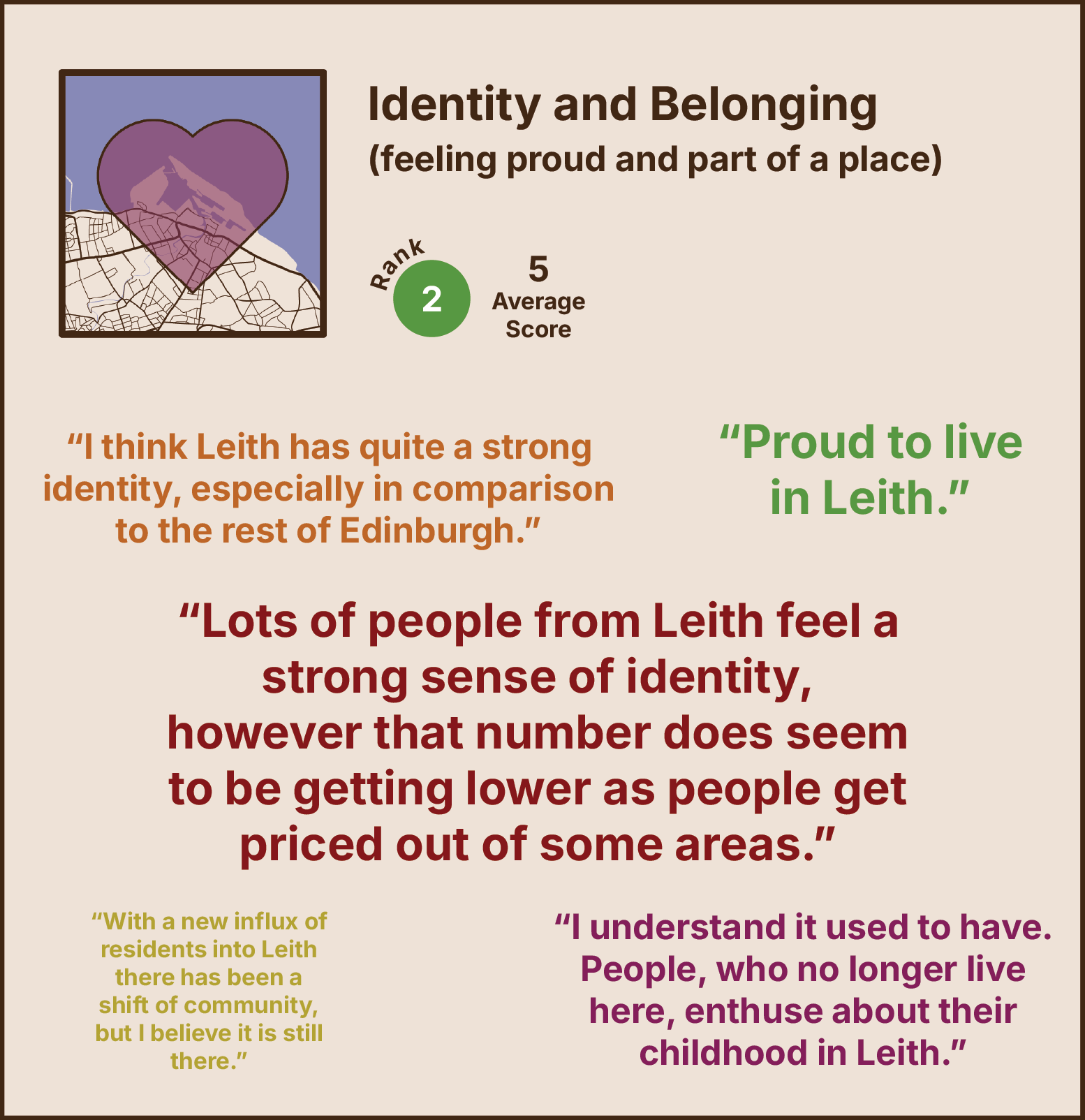
Finally, Leith has always been a place apart from Edinburgh, with its own history and identity. This is something residents feel very strongly about. Leithers have always been independent of mind and spirit, self-reliant, and not shy of giving their opinion. This is at risk of getting lost in a modern age where socialising is often detached from location and as part of a city in which Leith forms less than one tenth the population. The plan’s vision is that Leith is a place that makes its voice heard, retains its unique character, and where residents are informed and engaged (Topic F).
The document was split between the Local Place Plan which contained aspects relating to Planning, and the Community Action Plan which contained aims that aren’t core to the Planning process and need to be taken on by other organisations. We have amalgamated both in the summary sections below.
Topic A.
A social place that respects all those who make it their home, with spaces for all people to meet and enjoy themselves.
Background
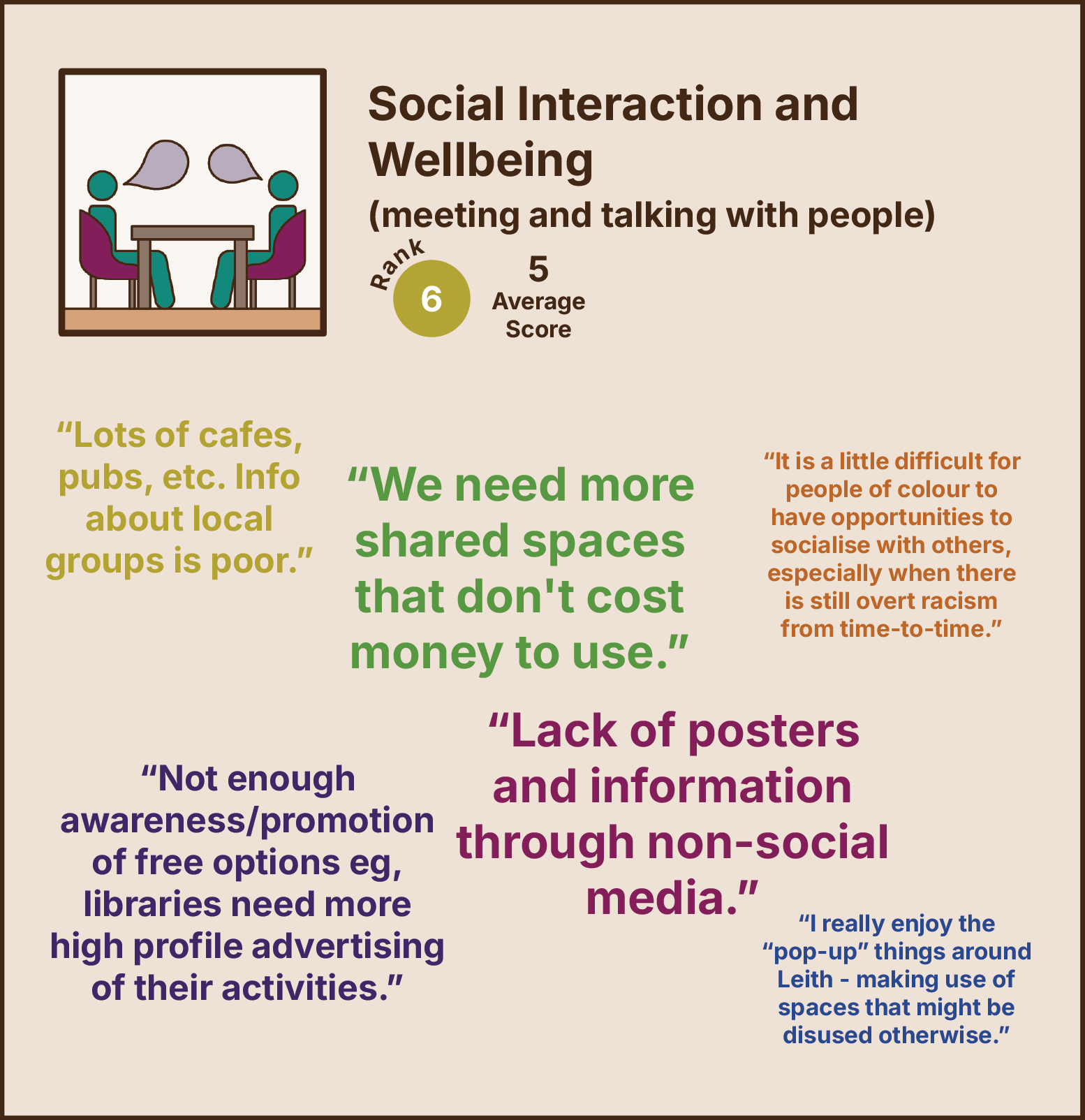
Leith is a diverse and vibrant place. As a port, it has always been this way. Today, recent new communities, from Ukrainians to young professionals, international students and second generation migrants sit alongside the more long-established communities to make Leith the diverse, vibrant community shown in the wordcloud from Survey 1.
This brings with it inevitable challenges and pressures, which are shown in some of the quotes from the Surveys adjacent. The pressures of this are felt to be undermining the cohesiveness of the community and giving rise to many of the other pressures, which is why we have put this topic first.
The aim for this Topic is for Leith to be a place which has the social and physical infrastructure to manage this change, and make it a place where all those who call it their home are respected and have a space to meet and enjoy themselves.
Quotes from the consultation
“The chains like Starbucks remove the community spirit and lacks the personal aspect Leith really benefits from.”
“I’ve been recently priced out of Leith but cause my life and work is there I still feel like I live there - just too expensive”
“It is a privilege to live in Leith, but I am concerned that gentrification (from which I myself have benefited) is making it ever harder for poorer individuals and families to remain here or find suitable accommodation etc.”
“It is a little difficult for people of colour to have opportunities to socialise with others, especially when there is still overt racism from time-to-time. This is quite isolating and there should be events put on for us to feel safe and socialise with each other.”
“There are not enough opportunities for older/disabled people with additional support needs, on low incomes & are digitally excluded”
“Whilst gentrification is amongst the people of Leith, it is a certain type people are wishing for. Shiny chains are not for Leithers, and most would opt to support local businesses.”
Summary of the Plan
Add library space to the east part of Leith where there currently is none. Set up a Friends Of organisations for the two Libraries in Leith.
Stop the loss of indoor social spaces. Protect and enable more low-cost social spaces that attend to social isolation issues.
Protect and improve the provision of leisure facilities in Leith. Deliver the Links masterplan.
Set up a Development Trust for Leith.
Protect existing, and enable more, low-cost social spaces that attend to food poverty.
Support democratically owned not for profit independent businesses that reach people on lower incomes.
Explore creating public facilities within under-used public sector buildings such as Victoria Quay.
Background
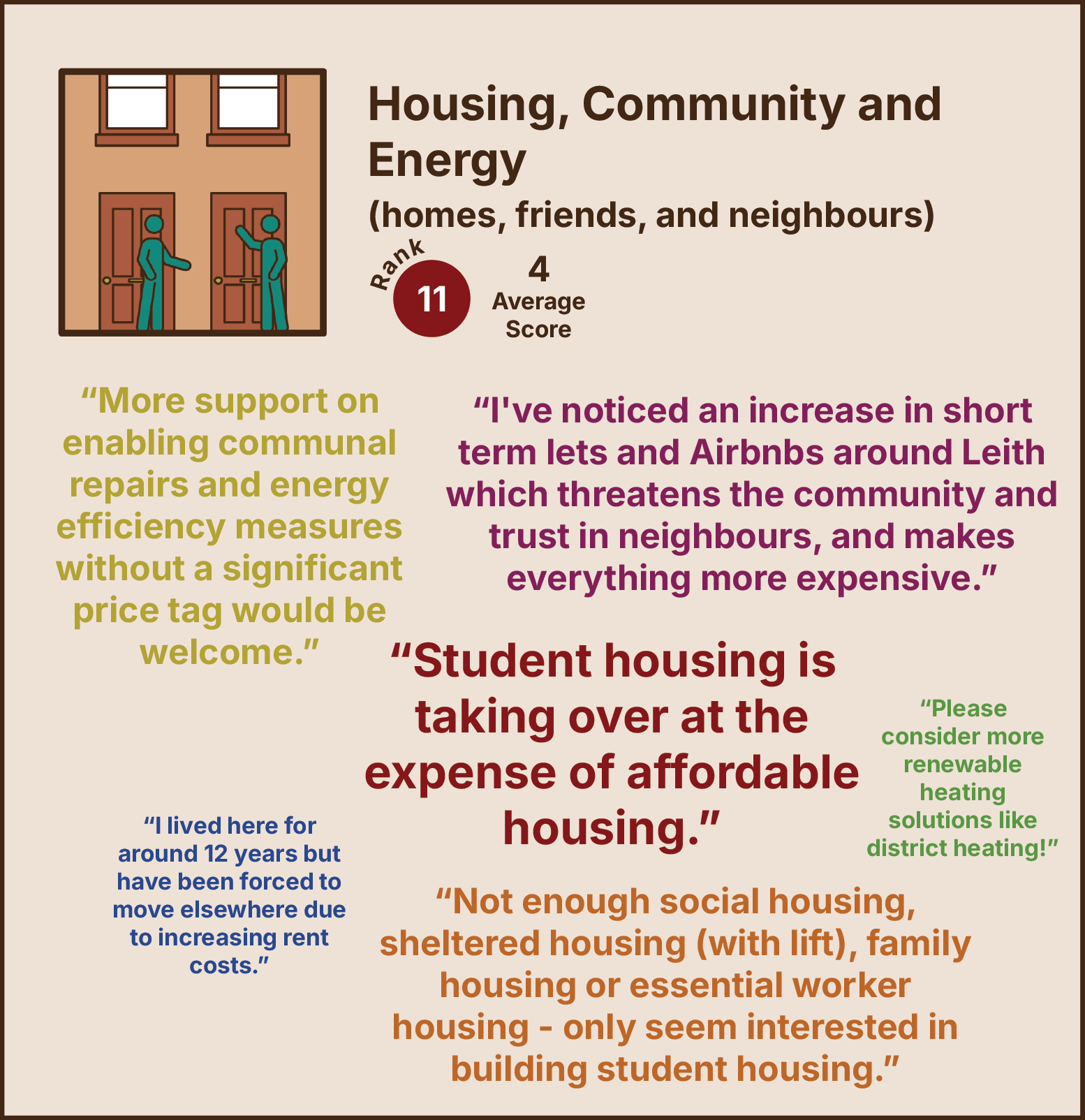
The consultation feedback is clear that Leith has experienced significant reduction in available homes compared to the demand for them. This includes losses due to short terms lets, and serviced accommodation in what were previously homes. People see student flats being built but very few affordable homes being created. This is seen as the wrong choice when people can’t afford to live in the area due to a lack of housing. At the same time the increasing popularity of the area has brought in newer and often affluent people, pushing property prices and rents up, and resulting in existing residents being forced to move out. The unfairness of all of this, coupled with demographic change, has led to friction between different groups in Leith.
Residents noted that some of the new homes being constructed do not come with community space, or usable green space. There is concern that these new developments won’t create communities. Existing buildings are seen to be in poor condition and expensive to heat. In the consultation, Housing was scored the third lowest out of the fourteen areas for satisfaction by respondents.
The aim of the plan is for Leith to have comfortable and affordable homes for all of its diverse population, and for those homes to support the creation of community.
Topic B.
A place with homes for the whole community - a comfortable, affordable home for every resident.
Community Council work on this topic
LCCC Policy Paper on PBSA: https://leithcentralcc.co.uk/wp-content/uploads/2025/06/lccc-position-on-pbsas-april-2025.pdf
LLCC Paper on applications for hotels in the Links area: https://www.leithlinkscc.org.uk/wp-content/uploads/2024/06/Full-Hotels-article-with-references-pdf.pdf
Summary of the Plan
Retain and create more homes for people on low incomes, those with specific housing needs, and those who are being priced out of Leith.
Cease giving planning consent or licenses for uses that reduce long term residences. This includes Purpose Built Student Accommodation (PBSA), Short Term Lets (STLs), serviced apartments, and apart-hotels.
Create licensed accommodation for people with emergency housing needs that is aligned with the wider aims of the Place Plan.
Cease giving licenses for large Houses of Multiple Occupancy (HMOs) and enforce licensing of them. Reduce over-provision of HMOs.
Change the development plan to allow and support densification schemes in the areas shown on Map B1, and respect the existing nature of the areas as shown on the Map.
Bring vacant housing back into use through community action alongside the City Council. This may be aided by the creation of a Housing Trust for Leith.
Investigate alternative housing solutions, such as a Housing Trust, or co-housing to respond to vacant properties in hard to solve mixed tenure situations.
With City of Edinburgh Council’s Local Heat and Energy Efficiency Strategy (LHEES), work to create community-owned energy via council support and community organisations such as Leith Energy. See Map B2.
Background
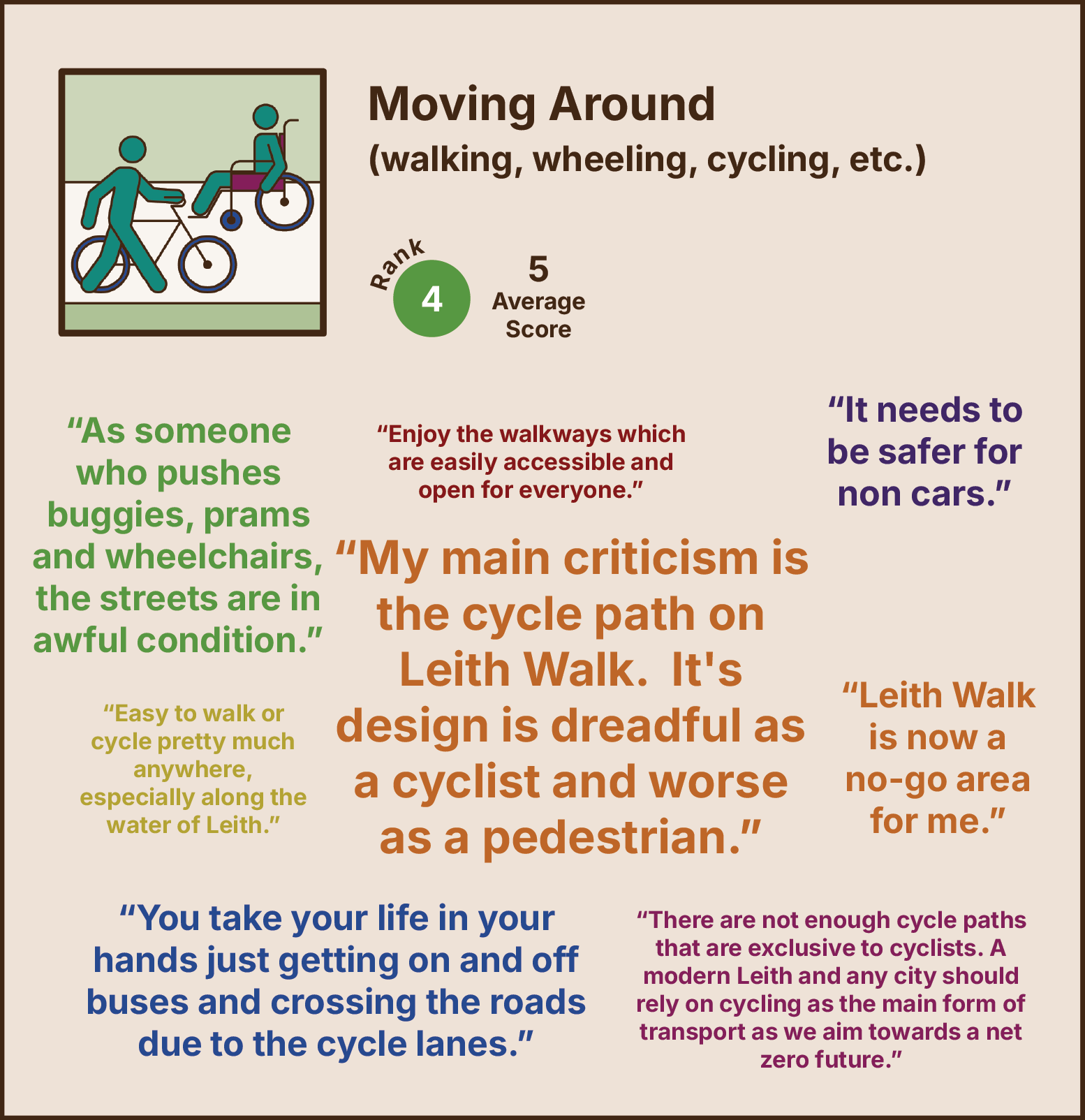
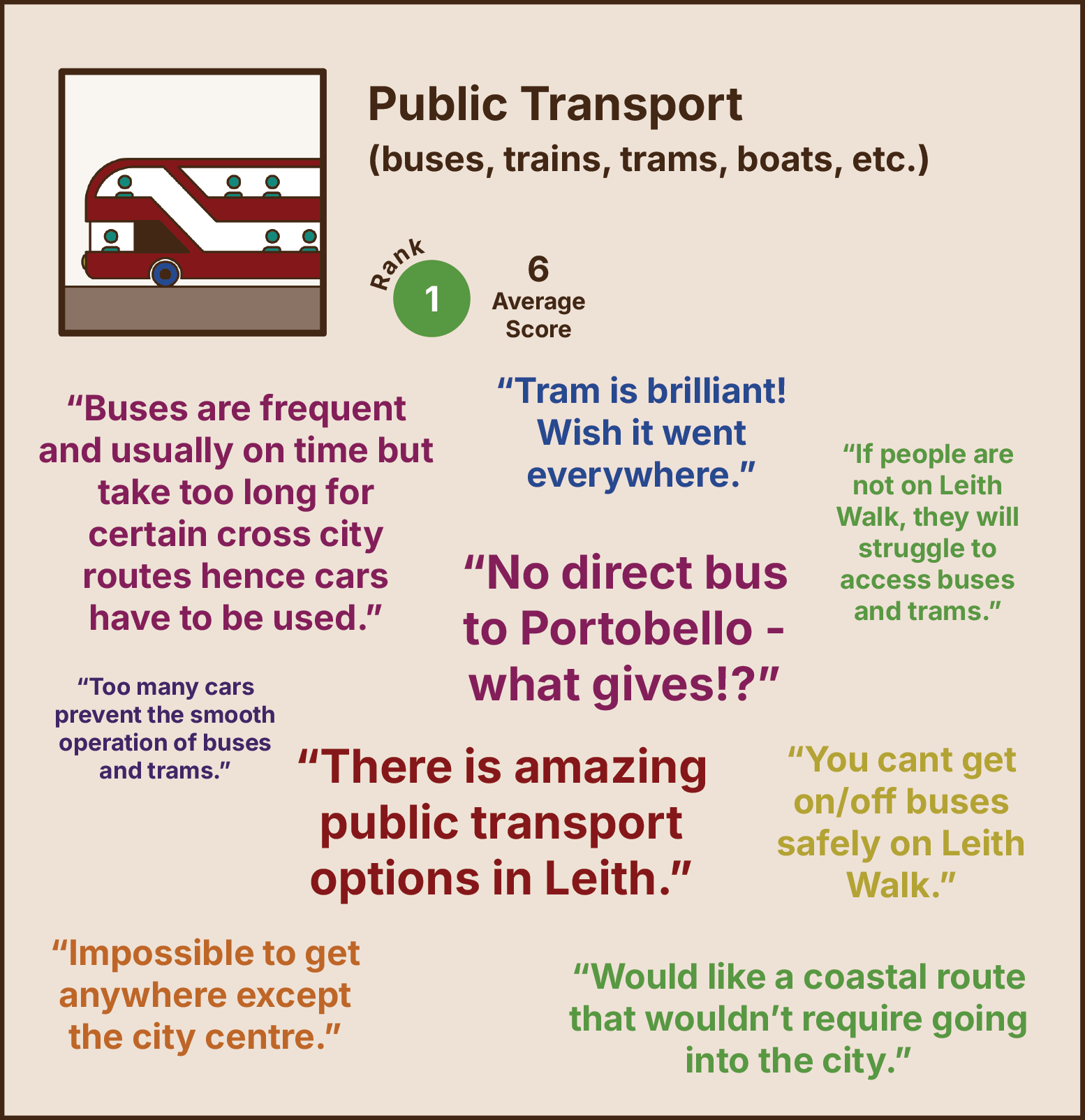
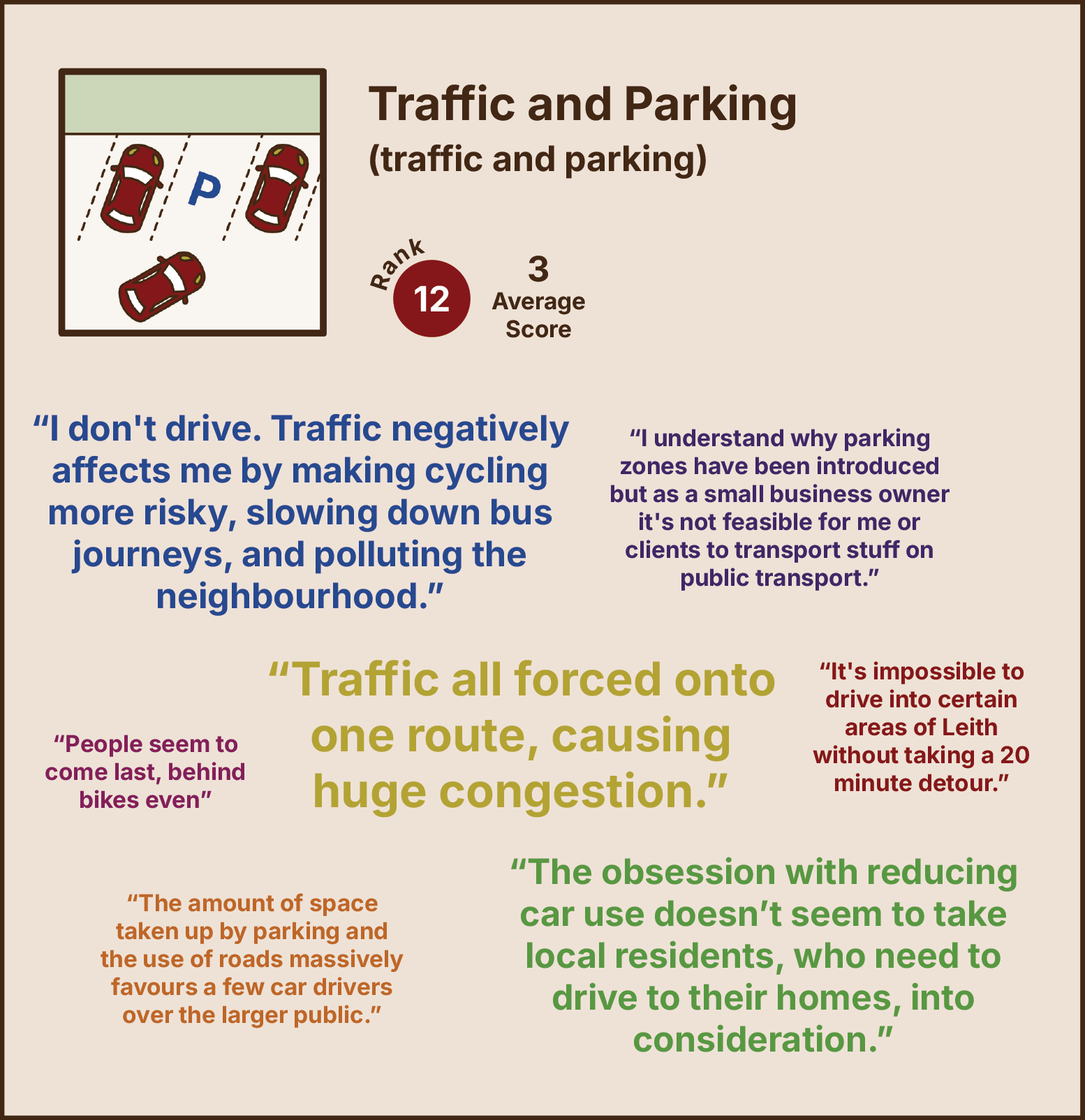
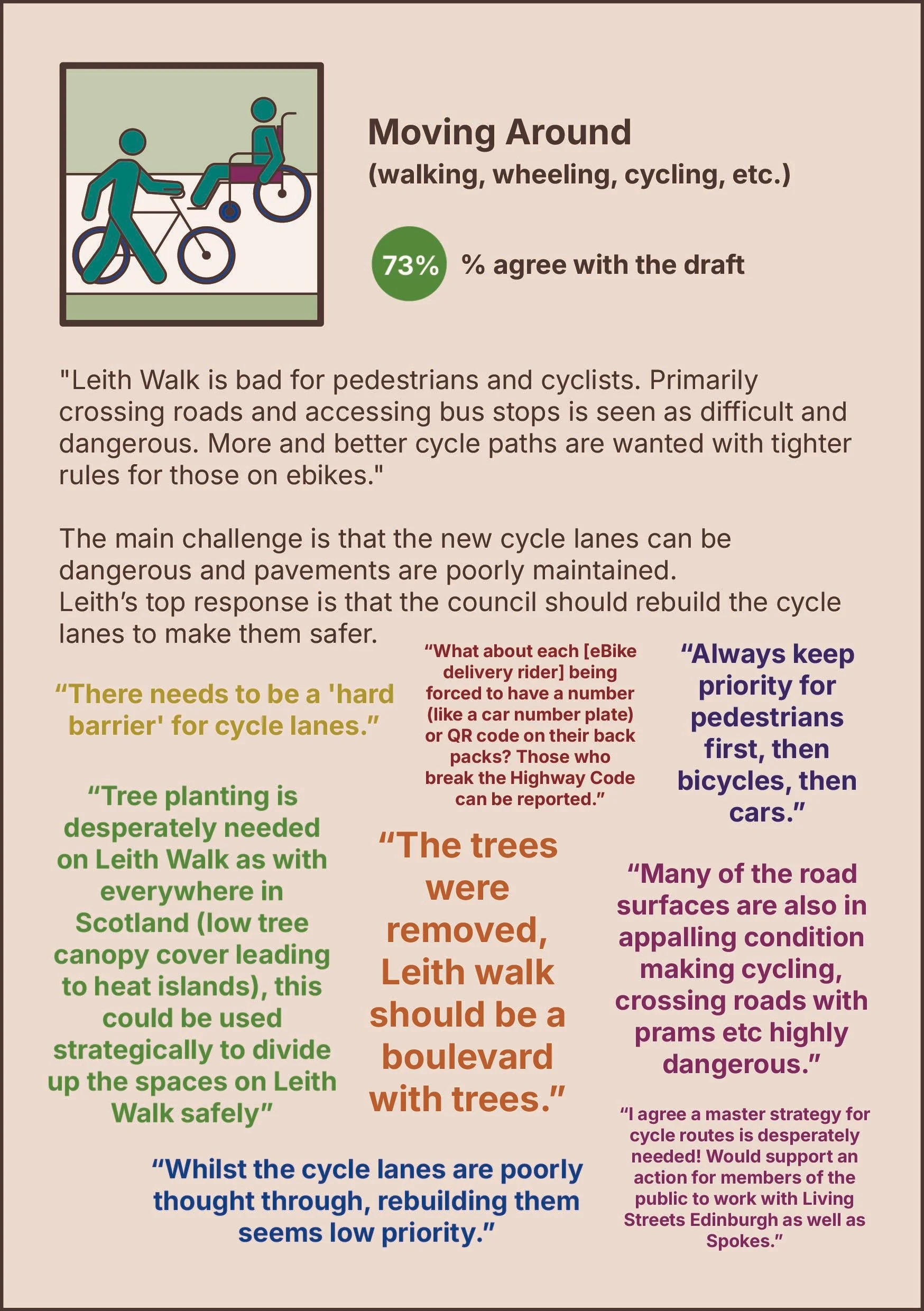
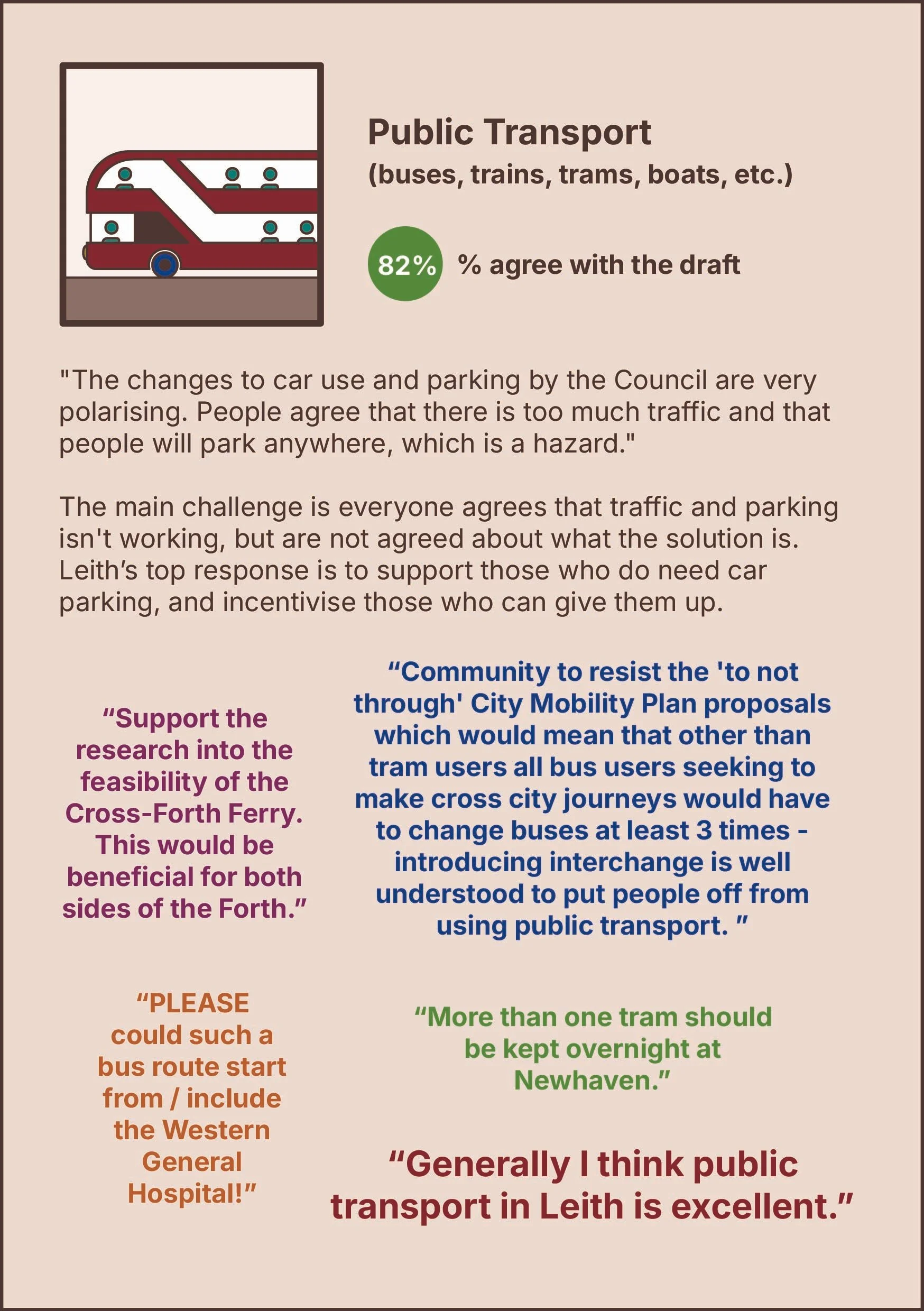
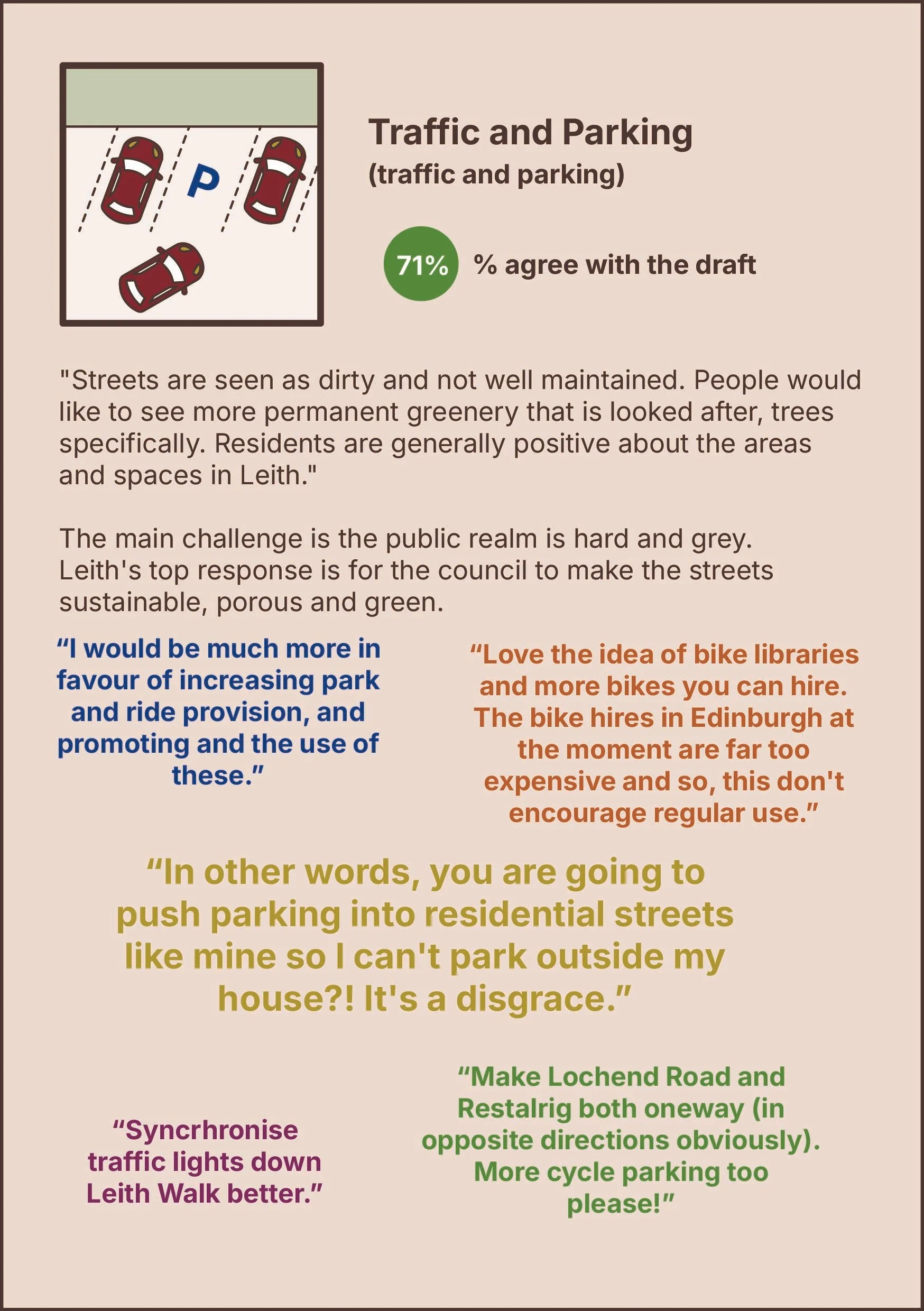
There is a lot of pressure on moving around, into, or through Leith. The area has a growing and diverse population who travel in different ways. It is a historic ‘node’, with transport routes arriving at it and running through it, creating congestion. Recent changes to improve things are not yet fully complete. The Low Traffic Neighbourhood (LTN) and Leith Connections are partially complete, and the Tram snagging is still to be finished, leaving residents unhappy with how they have been treated. The cycle lanes and reduction in ease of car usage are very divisive. The Traffic topic in the Surveys was the second lowest scored aspect of the fourteen. On the up-side, the Tram has been a huge success, with almost universal approval. Lothian Buses are also regarded very positively, and the general principal of the cycle lanes is liked, even if the detail of them is a problem.
Topic C.
A place that is fair for all to move around – it must become a place that is fair for all moving around it, into it, or through it.
Quotes from the consultation
“What about each [ebike delivery driver] belong forced to have a number (like a car number plate) or QR code on their backpacks?”
“Always keep priority for pedestrians first, then cyclists, then cars.”
“Whilst the cycle lanes are poorly thought through, rebuilding them seems low priority.”
“I agree, a masterplan for cycle routes is badly needed!”
“Generally I think public transport in Leith is excellent.”
“PLEASE could a bus route start from/include the Western General.”
“I support the research into the feasibility of a cross-Forth ferry. This would be beneficial for both sides of the Forth.”
“In other words, you are going to push parking into residential streets like mine so I can’t park outside my house?! Its a disgrace.”
“I would be much more in favour of increasing park and ride provision, and promoting the use of these.”
Summary of the Plan
Alter the Leith Walk cycle lanes to align with the transport hierarchy. The needs of elderly, mobility and/or visually impaired pedestrians to be taken into account in any changes and future schemes.
Carry out a ‘lessons learned’ exercise on the Trams, Leith Connections, and the Controlled Parking Zones to get residents’ views to inform the follow-on actions. This review needs to be published.
Implement measures so the users of the cycle lanes are less of a danger to those around them. This should include more police action, training, and signage.
Establish and publish a region-wide approach to cars and traffic to explain what is being done to Leith.
A car owners group could be set up as a stakeholder for CEC consultation.
Provide more bike parking, and set up a bicycle library, including cargo bikes. Create Transport Hubs.
Add two new bus routes: one along the coast from Pilton to Portobello, and one to the Western General Hospital.
Reduce the coach travel impacts on local residents causes by visitors arriving by cruise ship.
Investigate light-rail to East Lothian, as shown on Map C
Background
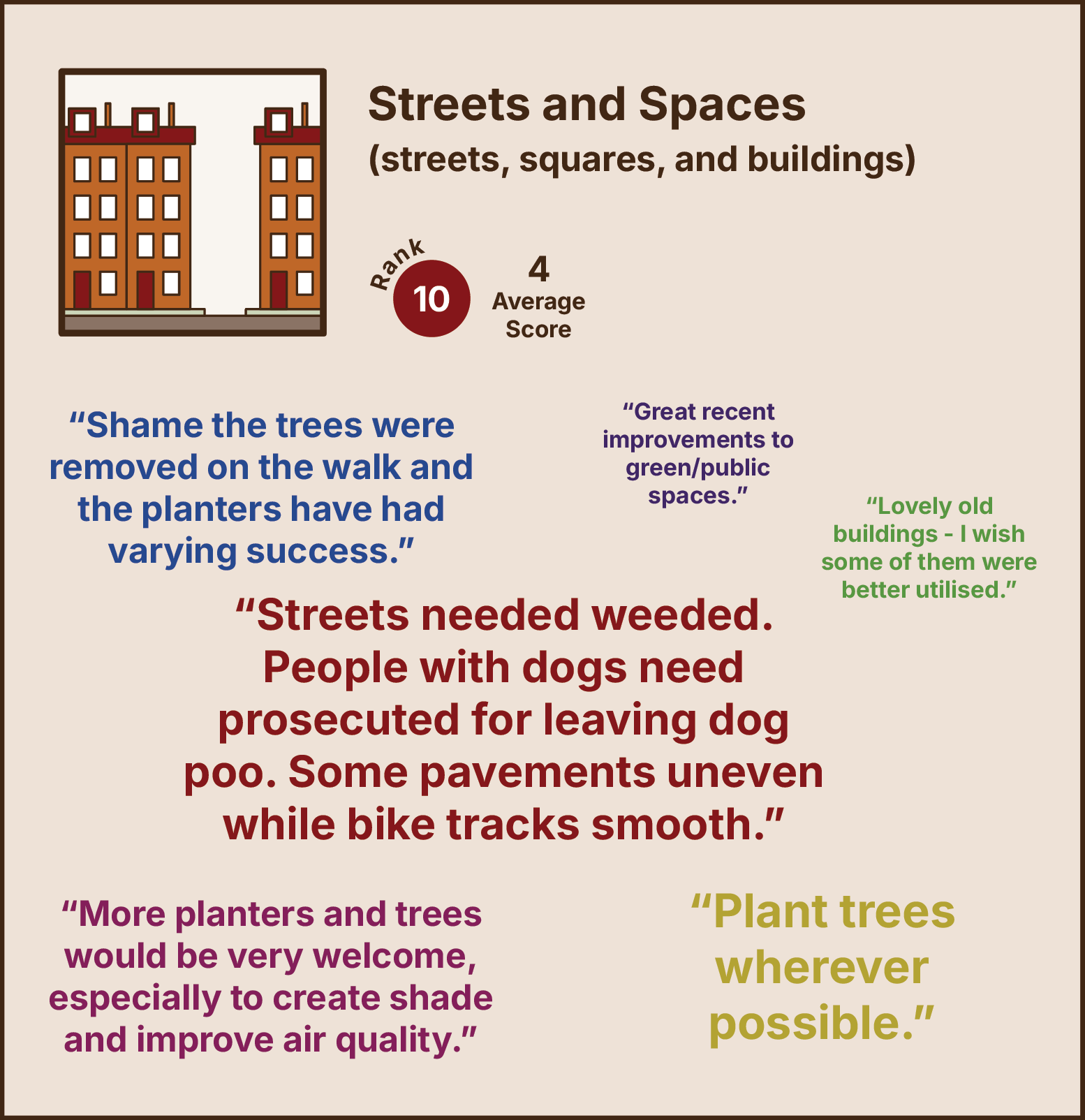
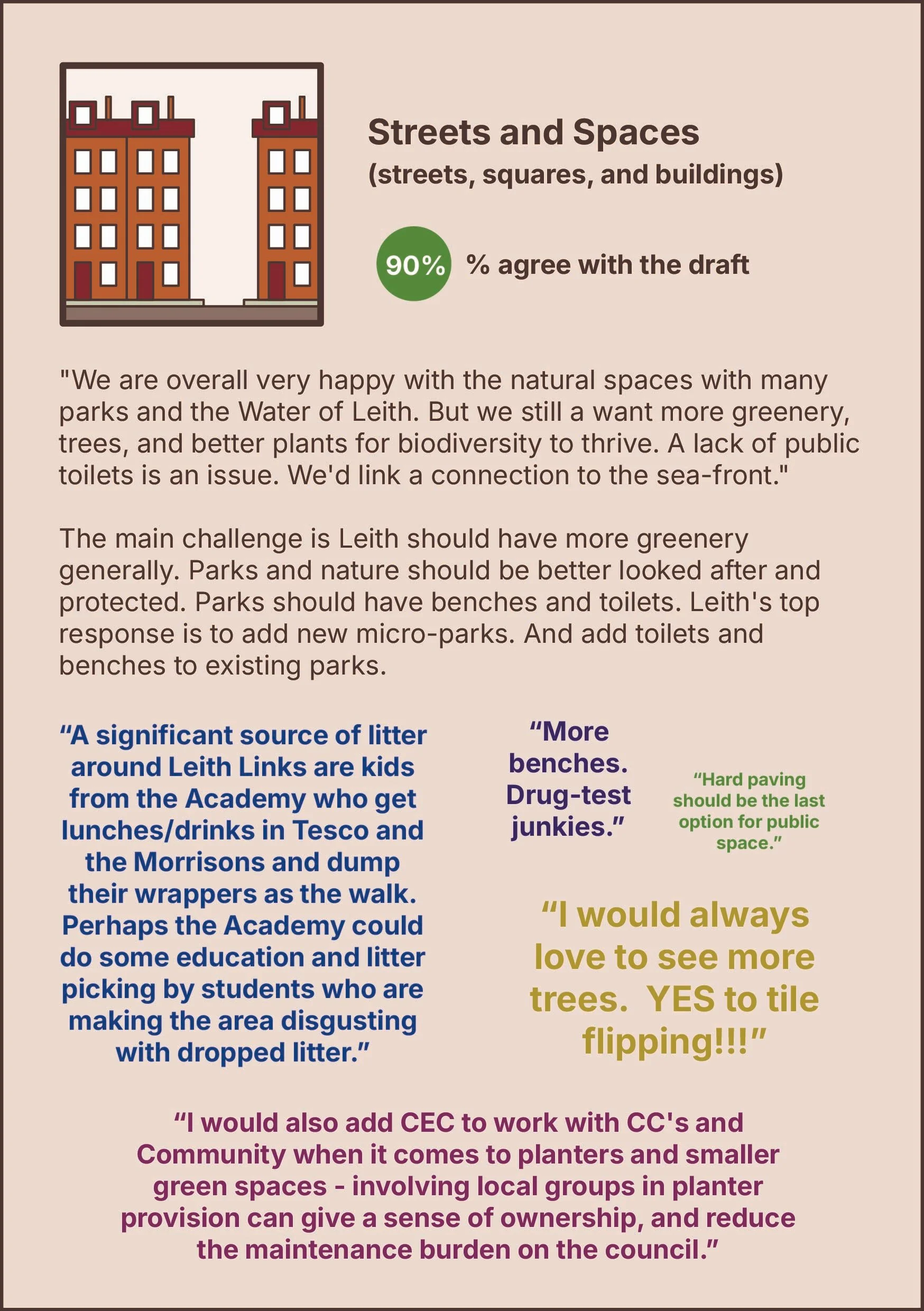
The need for fair and equitable streets extends to all aspects of the outdoor areas around Leith. Taking feedback from the consultation, it is clear Leith’s streets and spaces don’t yet work for all. They are considered dirty and badly maintained, and occasionally unsafe. Leithers live life outside, and move through these spaces between home, work, and socialising. Leith’s external spaces need to work for all.
Topic D.
Streets that are alive - outdoor spaces that are fair for all to use, safe, pleasant, green and fun.
Summary of the Plan
CEC to clean the streets and maintain the parks more.
Develop the air quality action plan 2025-2030 in consultation with the community councils and wider stakeholder groups.
Achieve meaningful and long-term solutions to the long-standing and persistent problem of pervasive and offensive smells from Seafield waste treatment works.
Deliver the Leith Links Masterplan by the City Council.
Increase the planting on the major streets, including trees, and have a plan to maintain them.
Make the public realm more permeable, with more Sustainable Urban Drainage schemes (SUDs) features as shown on Map D.
Development Plan to include green corridors and stepping stone habitats, and then to implement this in Planning decisions. Bus stops to have sedum roofs added.
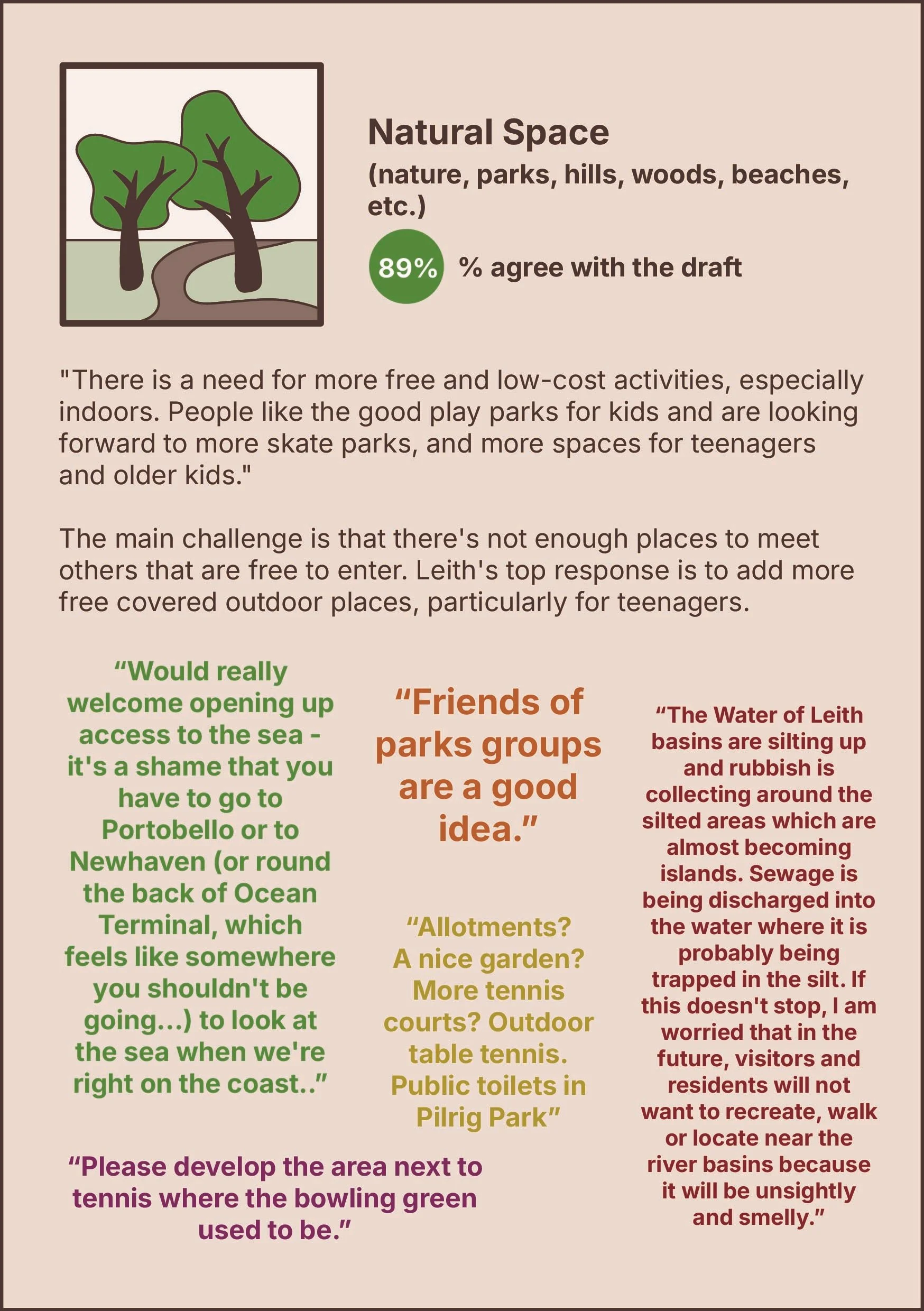
Protect and expand access to the coast, shore and river. This should include a commitment by CEC to protection of / access to a coastal route: a walking & cycling path continuously from Portobello to Cramond. Create an outdoor swimming area in Victoria Dock.
Continuous improvement of the quality of the Water of Leith via the Water of Leith Stakeholder Group.
Old buildings should be retained and incorporated into new developments, rather than demolished.
Set up a ‘donate your street’ scheme to allow residents to pedestrianise their street.
Reinstate street sweepers (‘scaffies’) with a responsibility for one area of the major streets.
Help dog owners to limit the negative effects of their pets
More active frontages. Have more police on the streets. Light the streets more thoroughly, in particular Great Junction Street and the parks.
Businesses to take more care of their immediate environments. This could be done by Business Improvement Districts (BIDs), Leith Chamber of Commerce, and connections to the schools.
Reduce the source of rubbish with more refilleries. Reduce the source of litter by banning plastic wrappers on takeaway food.
Install more bins both on streets, at bus-stops, and in parks, and for tenements.
Improve the public realm amenity. Install more benches, picnic benches, outdoor gym equipment, water fountains, band stands, and chess tables, basketball hoops, and football pitches.
Leith has historically been a place for working and living, yet recent changes have reduced workspaces, and places for manufacturing in particular. At the same time, Leith has also become a place for the creative industries, particularly marketing, design, architecture, the arts, and film. The consultation respondents highlighted the lack of well-paid local jobs – which connects to housing costs in Topic B – and an over-reliance on the hospitality industry creating a dynamic where the people working in Leith can’t afford to live in Leith, creating more traffic as people are forced to commute - see Topic C.
This dynamic connects to the Topic D issue of young people causing problems whilst out of work, or the Topic A issue of fairness and creating a place that provides a good life for everyone who lives in the area.
Leith wants to continue to be a place for manufacturing as well as the newer creative sector and needs buildings to enable both of these to happen.
Topic E.
A place connected to its engineering past and its creative future where all residents can find good jobs.
Summary of the Plan
Protect existing Town Centre space, and create more Town Centres.
Halt demolition of light industrial premises and protect what we have where this is zoned on Map E.
Ensure new developments include light industrial buildings where this is zoned on Map E.
Create a skills manufacturing hub for Leith’s light industrial operators and makers to come together as part of an economic plan for Leith. Use the Forth Green Freeport as an anchor. Support engineering apprenticeships.
Create a creative industries hub for Leith’s creative sector to come together as part of an economic plan for Leith. Use Custom House as an anchor. Protect the businesses and locations shown on Map E.
Establish an economic plan for Leith based on the recommendations in the Place Plan.
Understand what businesses and enterprises Leith needs, what exists, and what needs to be created.
Support the creation of more jobs for young people across all sectors, but particularly light industrial/manufacturing and skills and apprenticeships, to offer positive destinations locally for young people who are not going to University or College post-school.
Topic F.
A place that makes its voice heard, retains its unique character, and where residents are informed and engaged.
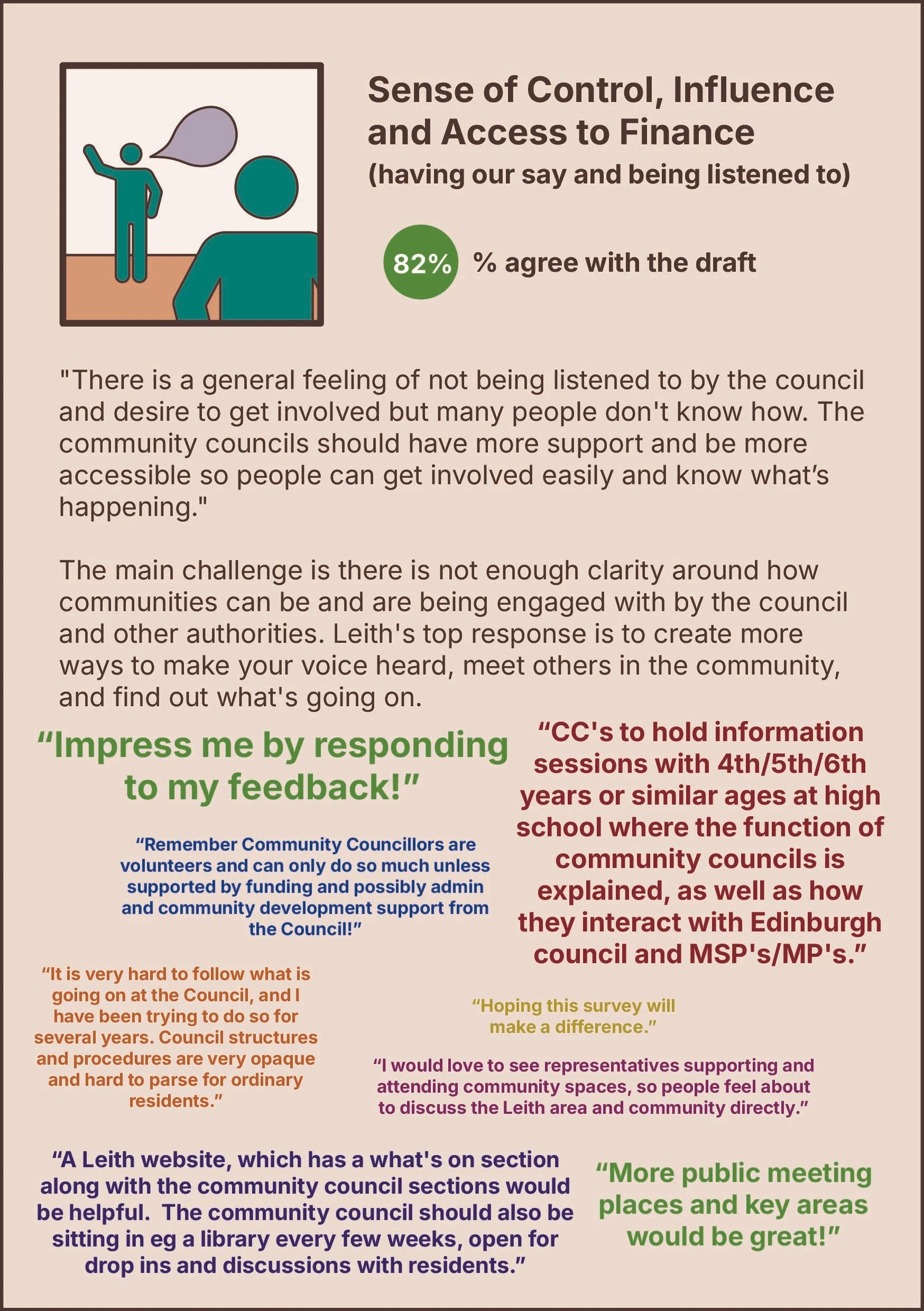
As with many places, Leith residents feel disconnected and disenfranchised from the changes happening around them. Respondents scored this aspect the lowest of all the questions during the consultation.
For a place with a history of independent thought and action, Leith should become again a place where the residents know what’s going on, understand how to influence it, and can make themselves heard.
Summary of the Plan
Section 75 contributions in Leith to fund things that take place in the area.
Look into entities or ways for existing groups to work together which would coordinate community work across Leith. This may support a Development Trust.
City of Edinburgh Council to run a project to improve their communication and transparency.
Carry out a project to promote more what Community Councils are and what they do.
Carry out a project to enhance transparency of the role Community Councils have, and what they can and can’t do.
Support Custom House plans to provide a Leith Museum, and as part of this to develop a website bringing Leith’s history and future plans together in one place, building on the work of previous organisations in this space.
City of Edinburgh Council to overhaul their consultation process to make it more accountable.
Make partaking in local democracy more accessible to all.
If Leith Town Hall ceases to be a Police Station as is likely in the next 10 years it should be returned to full public ownership.
A vision for Leith 2040
This vision is both a challenge and an invitation. We acknowledge the significant effort, organisation and long-term civic commitment that would be required to achieve it, particularly in a difficult economic climate. However, we hope that with vision, we will see where we are heading.
In 2045 Leith is a vibrant and diverse place, with people of many backgrounds including those whose families have been here for generations, and those newly arrived. The area is densely populated, but has a place for everyone. There are a large number of spaces indoors and outdoors for people to socialise whether that’s hobbies, entertainment, sports, faith-based activity, caring or sharing. These places are possible because of the Development Trust, which spots buildings that might be lost to the community and finds business cases and funding to keep them open and providing key services. The community centres and Libraries are the centre of these activities.
The Housing Trust, set up by the Development Trust, has several hundred flats mostly taken on from short term let owners who didn’t want to run them anymore given getting Planning consent is so difficult. These flats are reserved for local residents with lower incomes. They, along with the local Housing Associations, are partners with Leith Energy. Leith Energy owns the heat network in Leith, along with several thousand rooftop solar panels. It is community owned, and with the proceeds it maintains the tenements the Housing Trust owns flats in, with some left over to put back into the Development Trust. Leith Energy has kept bills down for everyone, helping people have more money to put into the local independent business. Tension around housing is much lower now some of it is held for those most challenged by rising property prices and rents.
The streets and parks are lovely places to be. The City Council has tweaked the bike lanes so they’re less dangerous for pedestrians, stepped up on maintenance, and employed some local people as ‘Scaffies’ - street sweepers who also keep an eye on street maintenance and report problems, stop outdoor cafe seating blocking the footpaths, and just by being around make the streets safer. Their job is made easier by all the Refilleries, and the lack of packaging on take-away food from the supermarkets.
The public transport is just as good as ever, and now there’s the light rail line from East Lothian there’s fewer cars passing through. Those who really need their cars can still use them, but everyone else is on bikes (sometimes from the bike libraries) or uses city-cars, or just walks given everything is close by what with the numerous Town Centres within easy reach.
Having saved the workshops and warehouses, and connected the businesses there with the Green Freeport and the Colleges, young people – many who live in the Housing Trust flats – are in apprenticeships doing jobs their grandparents might have recognised. The Creative Hub in Victoria Quay means those who are more inclined that way are being trained in established studios or start-ups. Leith really works for all the people who live here. A few hundred are employed by Leith Energy or in maintaining Leith’s tenements.
With the higher wages from the varied employers, more people are working 4-day weeks, which gives them time to get involved in the Community Councils, the Development Trust, the Community Maintenance Enterprises, the art schools, Remakeries, local sports teams, music groups, or just to go swimming in the Leith Lido in Victoria Dock.
Leith Festival is a great event, attended by thousands of people across several locations around the area. Everyone feels very invested in the area, given they have so many ways to get involved and the stable, interesting, varied jobs given them the time to do so. There’s much anticipation as the Leith Community Hero, and young Leith Community Hero awards are given out. Despite a few clouds overhead, there is sunshine on Leith as the band starts at the Proclaimers Bandstand on the Links.
Local Place Plan Process
The following sections set out how we consulted residents of Leith, checked the draft proposals, and arrived at the final document.
We took the structure and process from the Architecture + Design Scotland Place Standard Tool. This defines Place as comprised of 14 topics, as shown on the ‘radar’ diagram opposite. The Place Standard process, in simple terms, asks people to score their place against each topic. From the responses, it gives a way to understand what local residents see as working well, and therefore should be protected, and what requires improvement.
This structure and process was developed by a recognised independent third party and is used across Scotland.
We ran two surveys: one to find out what Leithers think of Leith; and the second to put out a draft plan to see what residents thought. From the second survey we then drafted a plan and submitted it to the three Community Councils for their input before completing the document and passing it to the Councils to submit.
Leith Gala Launch
The first survey was debuted at the Leith Gala day in June. Through this we aimed to start spreading the word of the Local Place Plan and have the first few questionnaires completed. We also set to collect as many ‘three words that describe Leith’ as we could from people passing by.
Survey 1
The questionnaire had three tiers for people to complete it in depending on how much time they had available and how much they had to say on the topic. All participants were asked to add their ‘three words’ and their connection to Leith (live/work/study). Then they could choose to go through the rest of the survey quickly by only answering the number scale questions, or writing detailed answers on each topic along with some extra neighbourhood questions at the end.
In July we had paper copies of the questionnaire in six local community buildings (Duncan Place Community Hub, The Heart of Newhaven Community, McDonald Road Library, Leith Public Library, Norton Park Business and Conference Centre, and Leith Community Centre) and placed flyers with QR codes all around Leith’s businesses and organisations. We also went to community groups and chatted with people to tell them about the Local Place Plan and gained more answers for the questionnaire through these conversations.
Analysis of Survey 1 Results
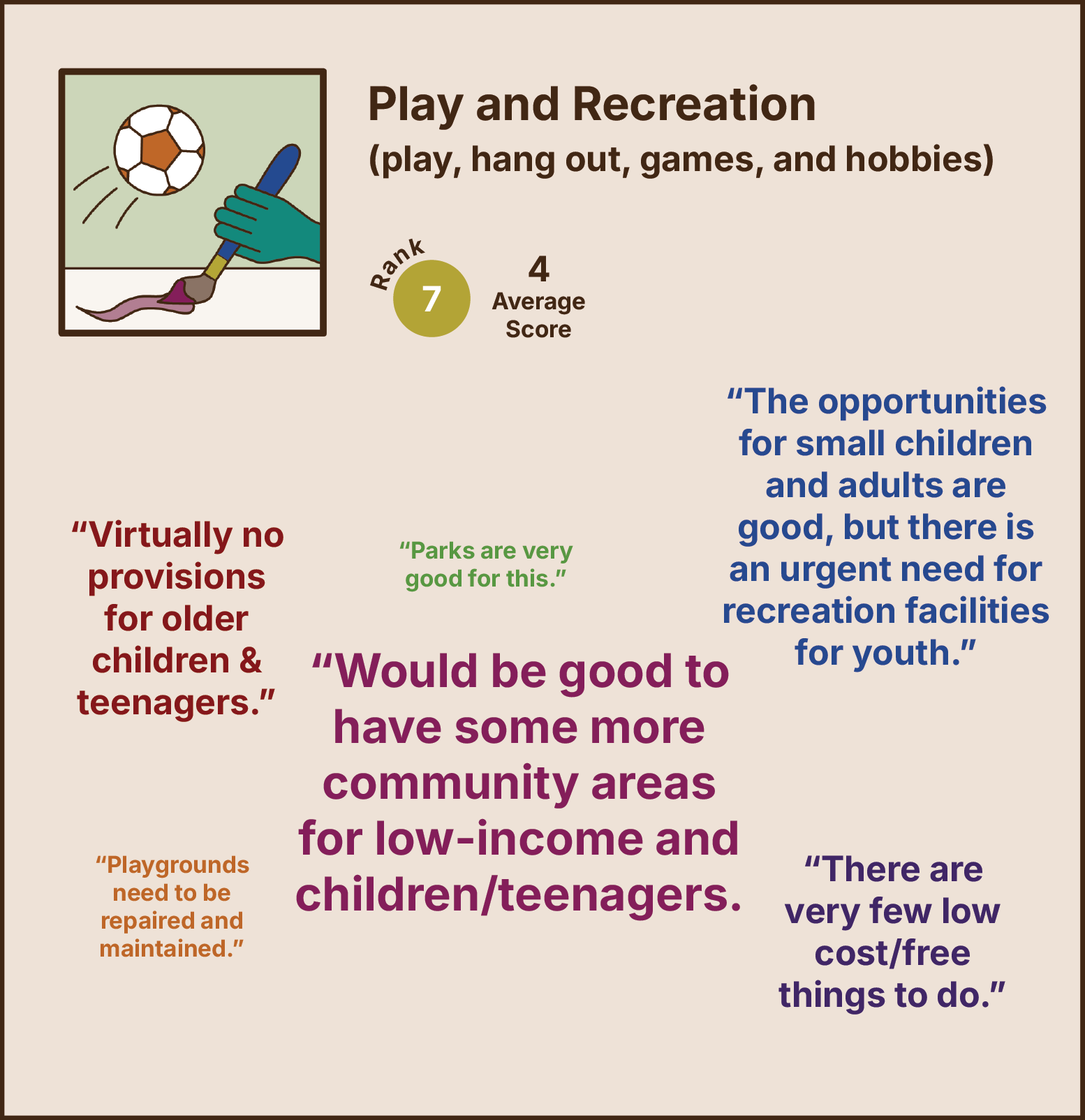
We had over 300 responses to the questionnaire, as well as many conversations at the events we attended. In August we brought all the data together. The analysis explored and contrasted what the people of Leith said they wanted their local place to be. Highlights of the results can be found below.
Survey 2
We ran a follow-up consultation exercise for residents of Leith through September and October. In this we presented the draft plan and asked people what they thought of it. From this we hoped to find out that we have understood Leither’s thoughts and opinions well enough and that residents feel comfortable with the Community Councils submitting the Plan on their behalf.
The draft place is set out in the link above (the Full Action Plan under each question). We conducted in person events around Leith to seek the views of Leithers. Hard copy surveys were available at The Heart of Newhaven Community Hub, Leith Community Centre, Leith Public Library, McDonald Road Library, Norton Park Business and Conference Centre, and Duncan Place Community Hub.
Analysis of Survey 2 Results
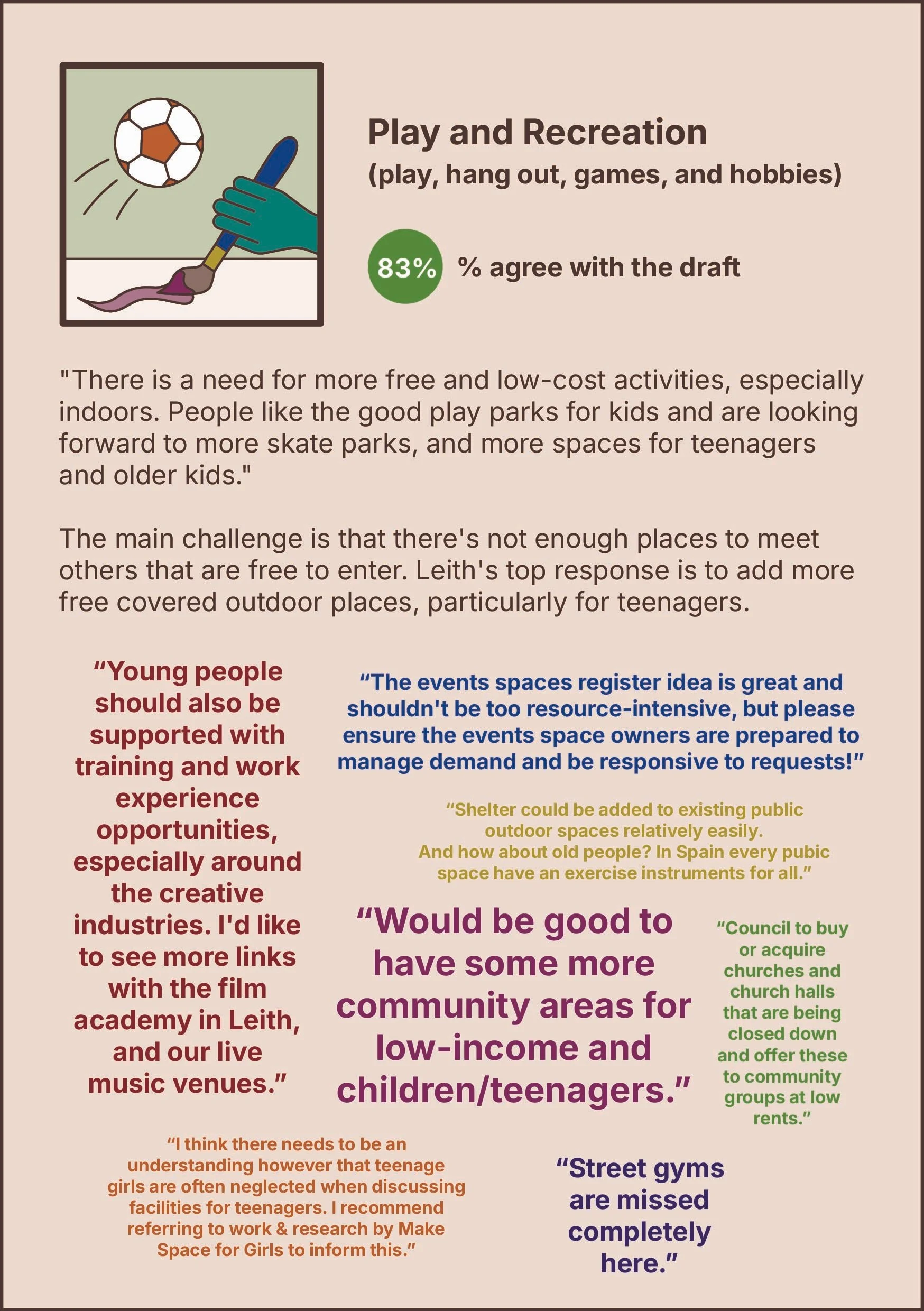
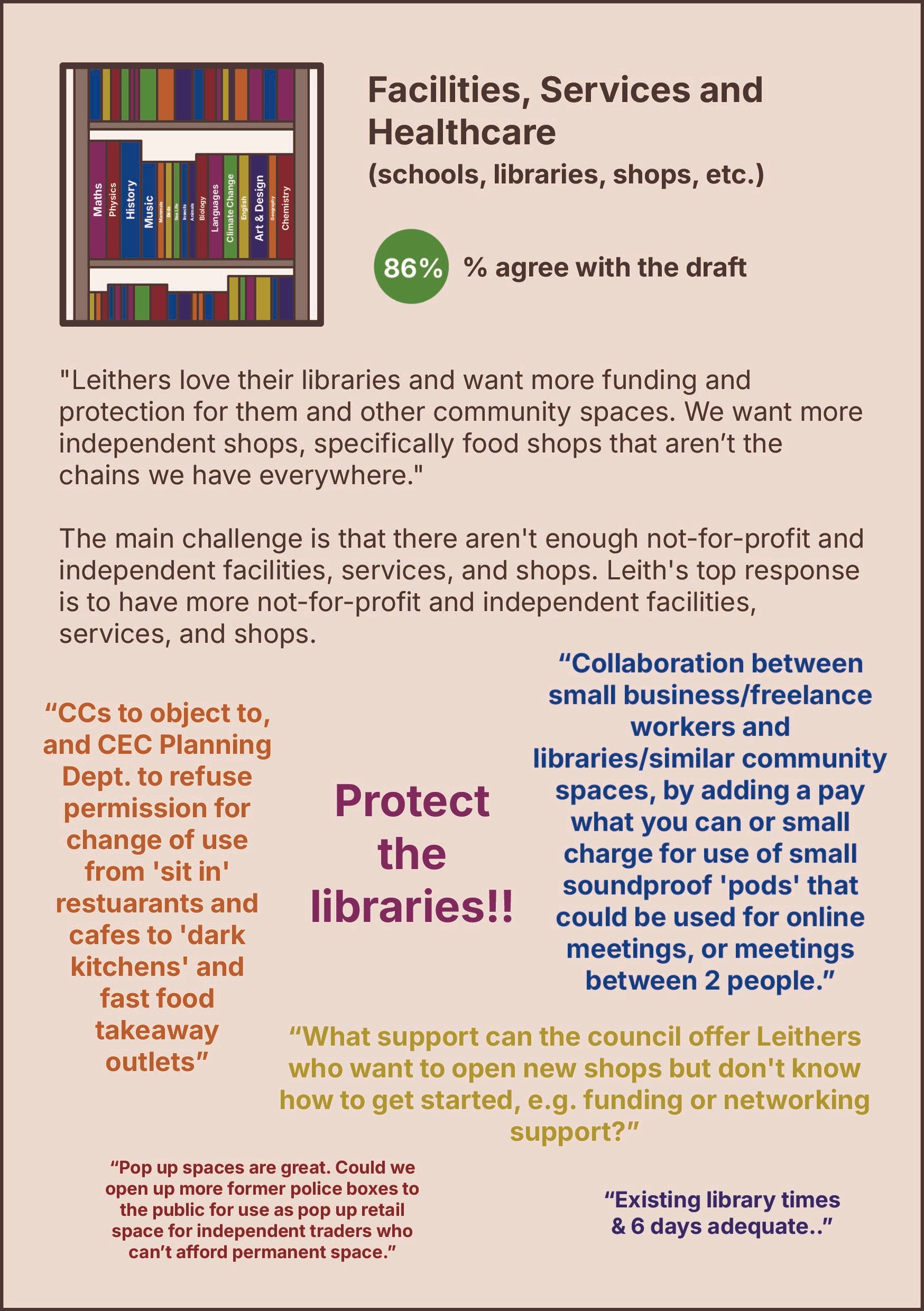
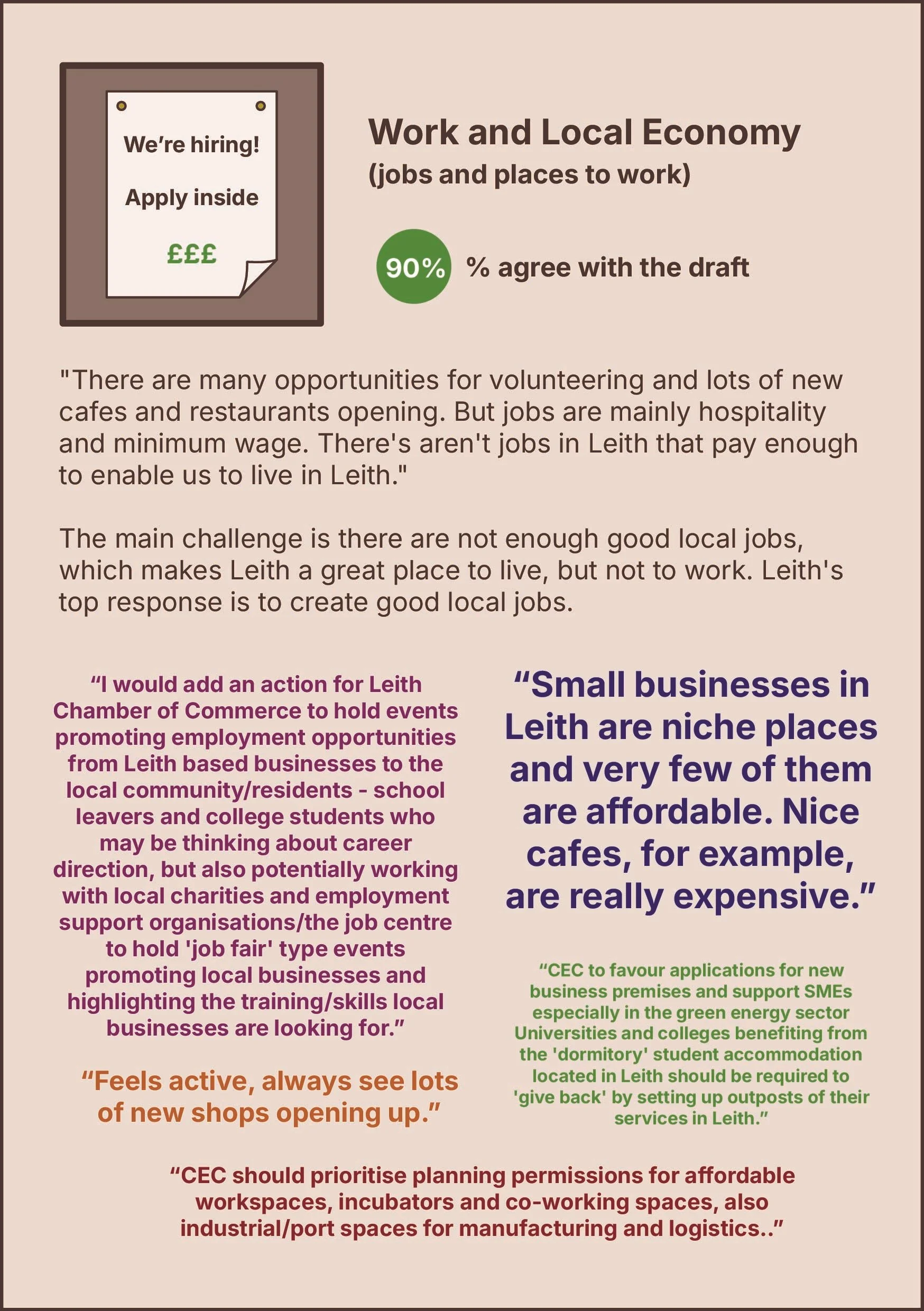
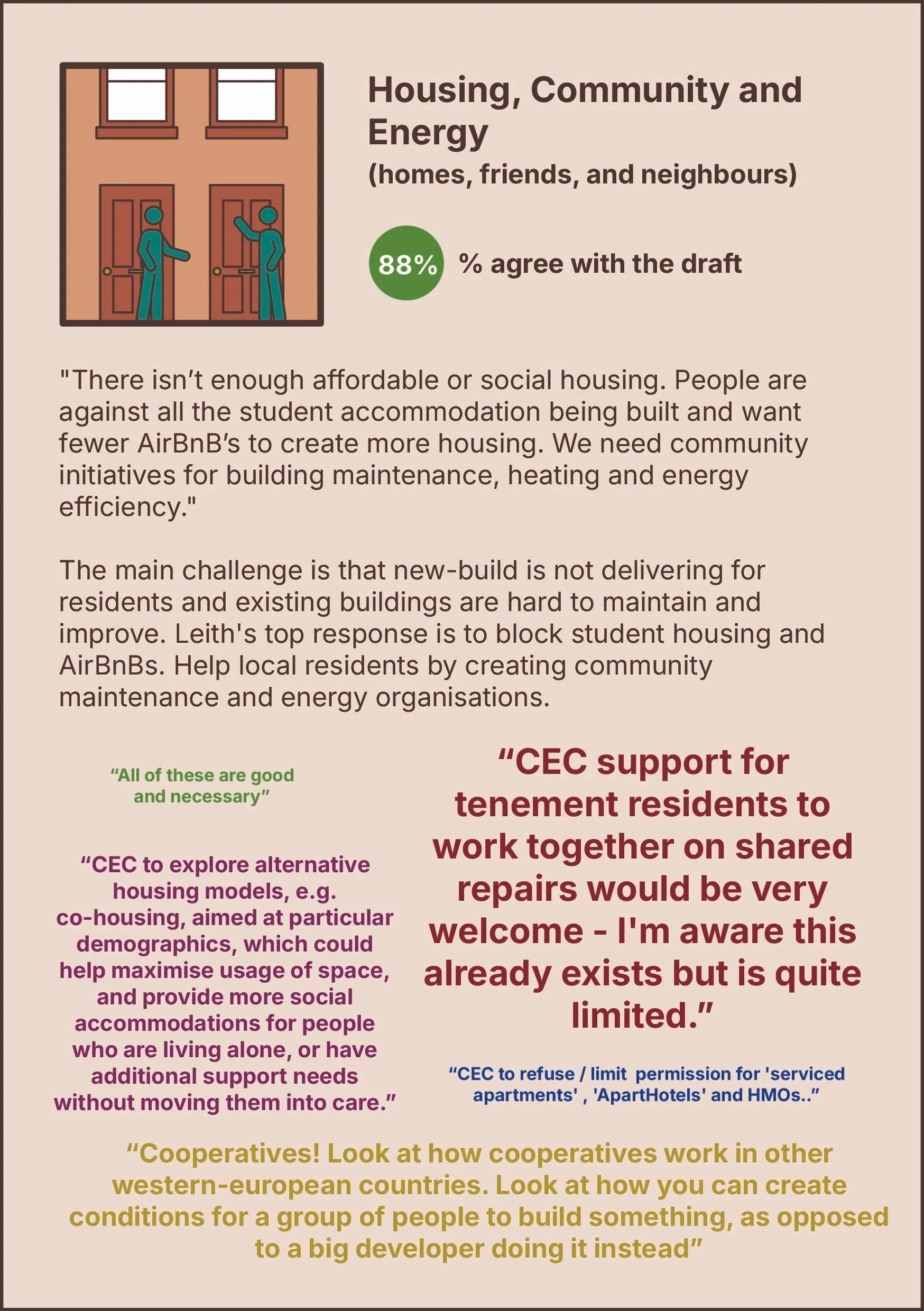
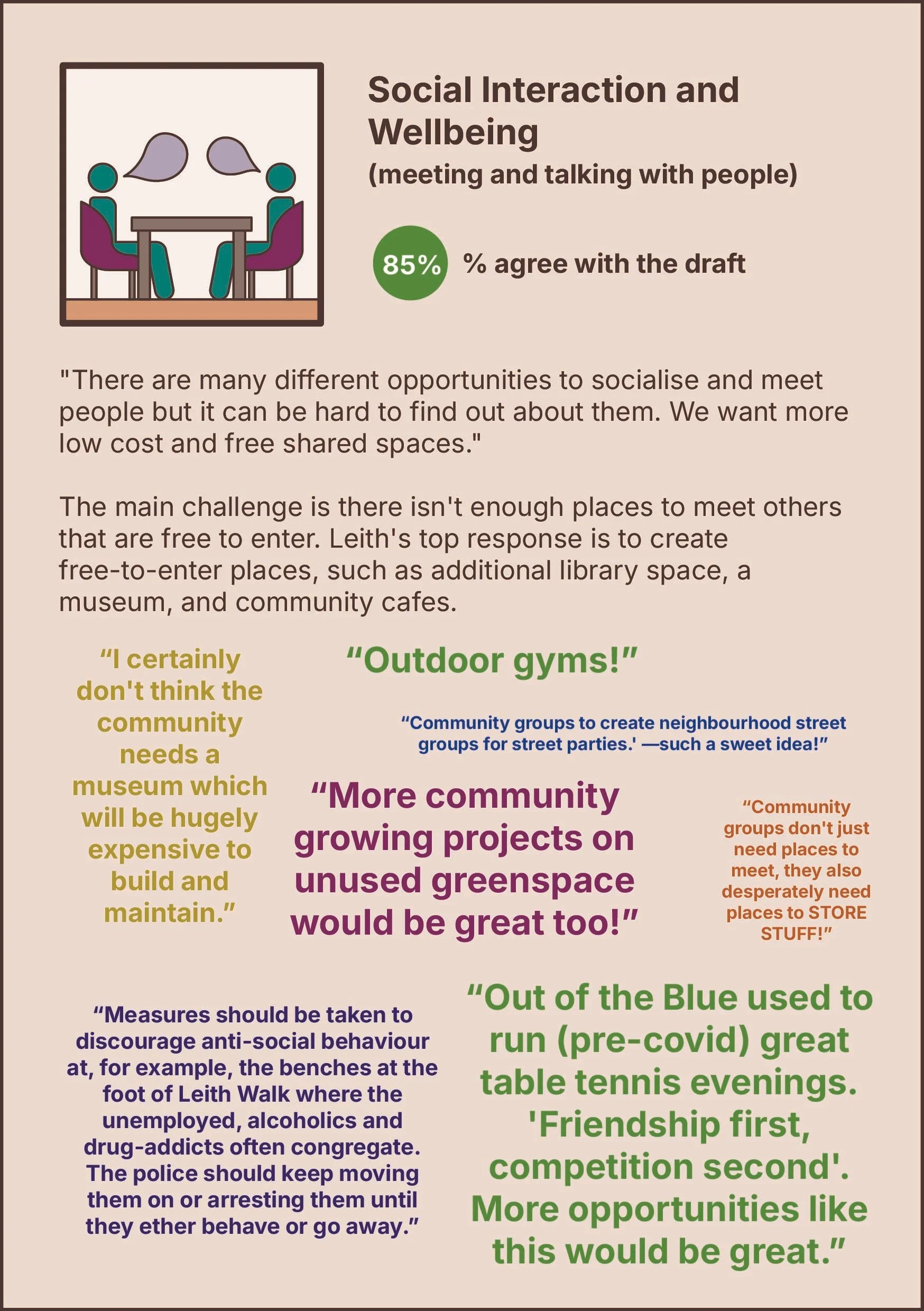
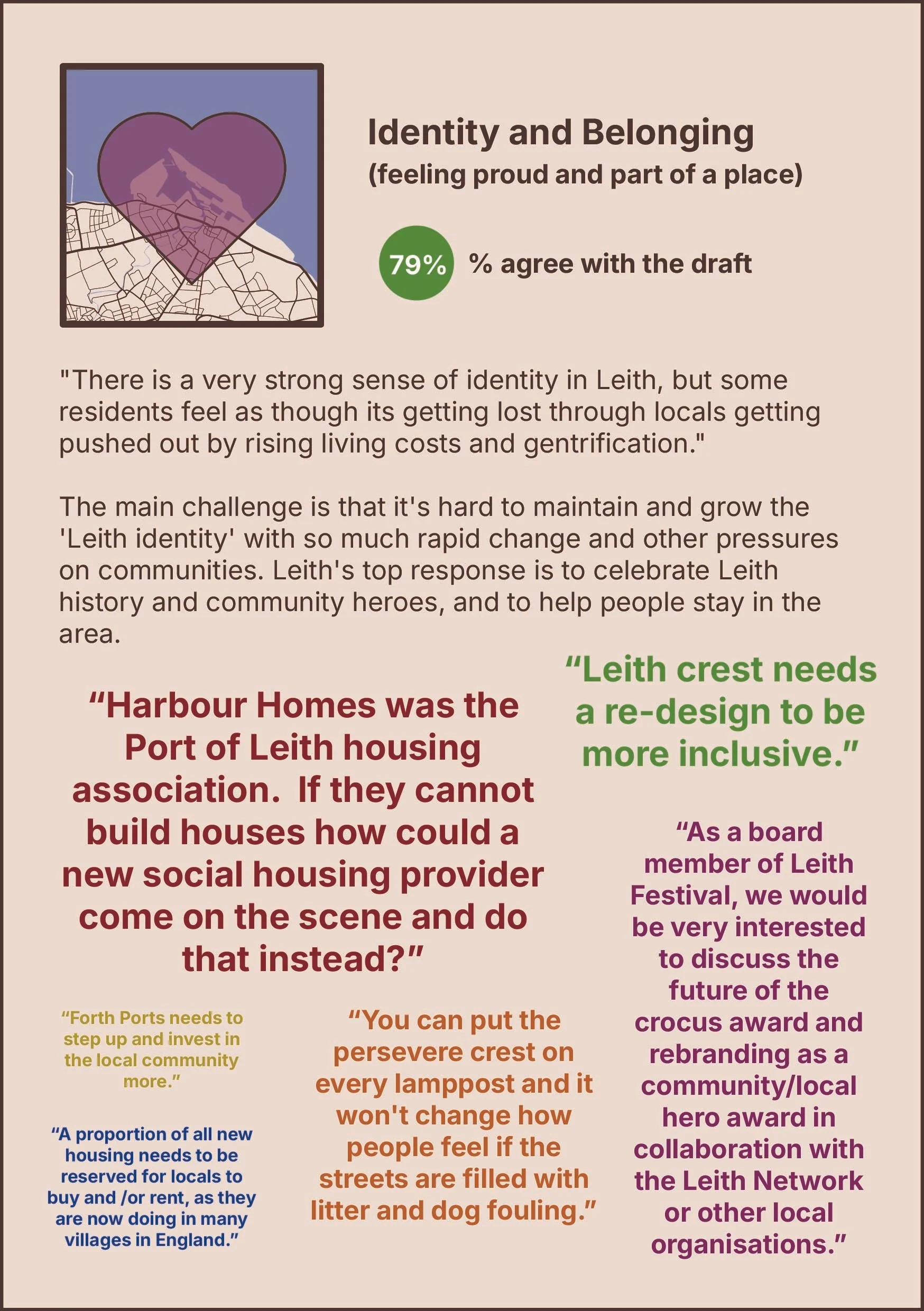
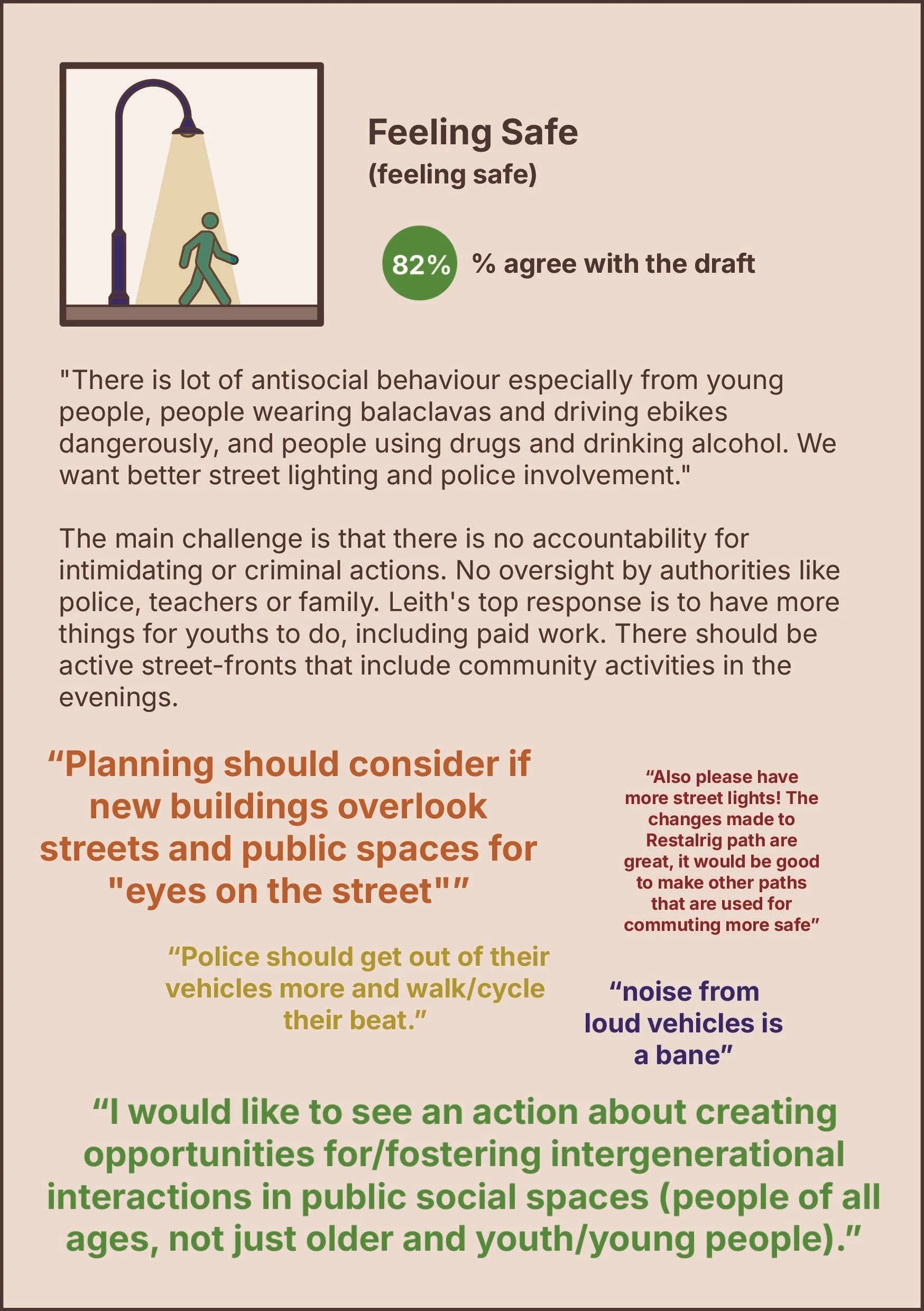
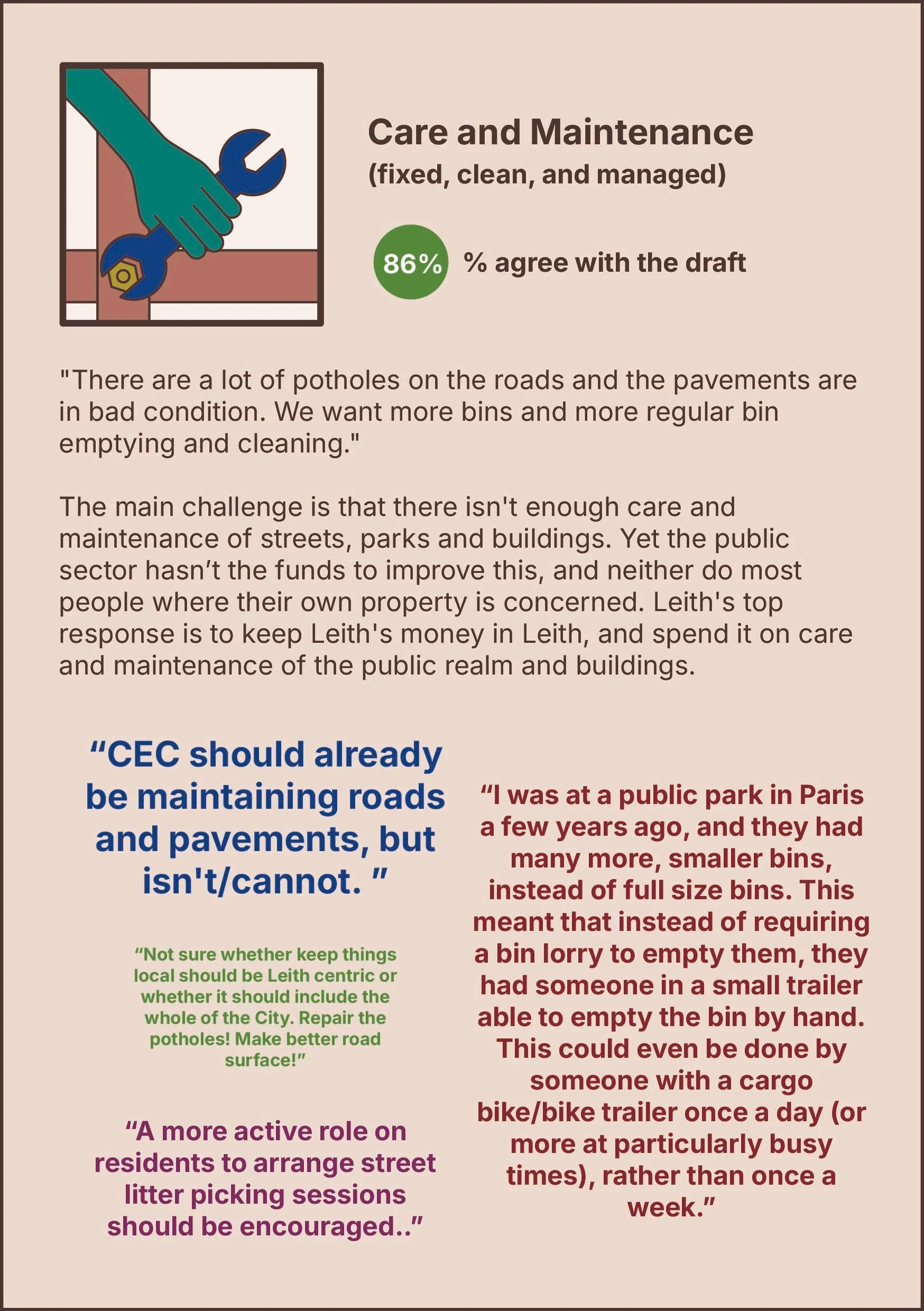
Again, we had a great response, with over 300 responses to the questionnaire, as well as many conversations at the events we attended. In October and November we brought all the data together. The respondents supported much of the draft plan, but also made great suggestions which were then added in. some of the feedback also helped us correct the focus and tone of the Plan. Highlights of the feedback can be found below.
Drafting and final sign off
As the authors and ‘properly constituted community bodies’, the final sign off had to be by the three Leith Community Councils. Eala drafted an initial version and then asked for review and comments from the Councils. This process involved working with a small ‘working group’ from each Council and revising the Plan following their feedback. Throughout, it was essential to balance this with the feedback that had been received from the residents of Leith through the consultation. We also met with the Ward Councillors for Leith and presented the plan to them. They provided feedback, which was brought into the Plan.
The Councils were able to bring their knowledge of the history of the area and previous aligned work with the City Council to the process, as well as making sure that long-running exercises and campaigns were referenced in the plan.
The Councils each wrote a foreword to the document, allowing them to explain what facets of it were of particular importance to their area.
In June 2026 the document was submitted to the City Council and registered.
Read the full plan here.